
MASTERCLASS: Ifakara, partners unite to advance drowning prevention in Tanzania
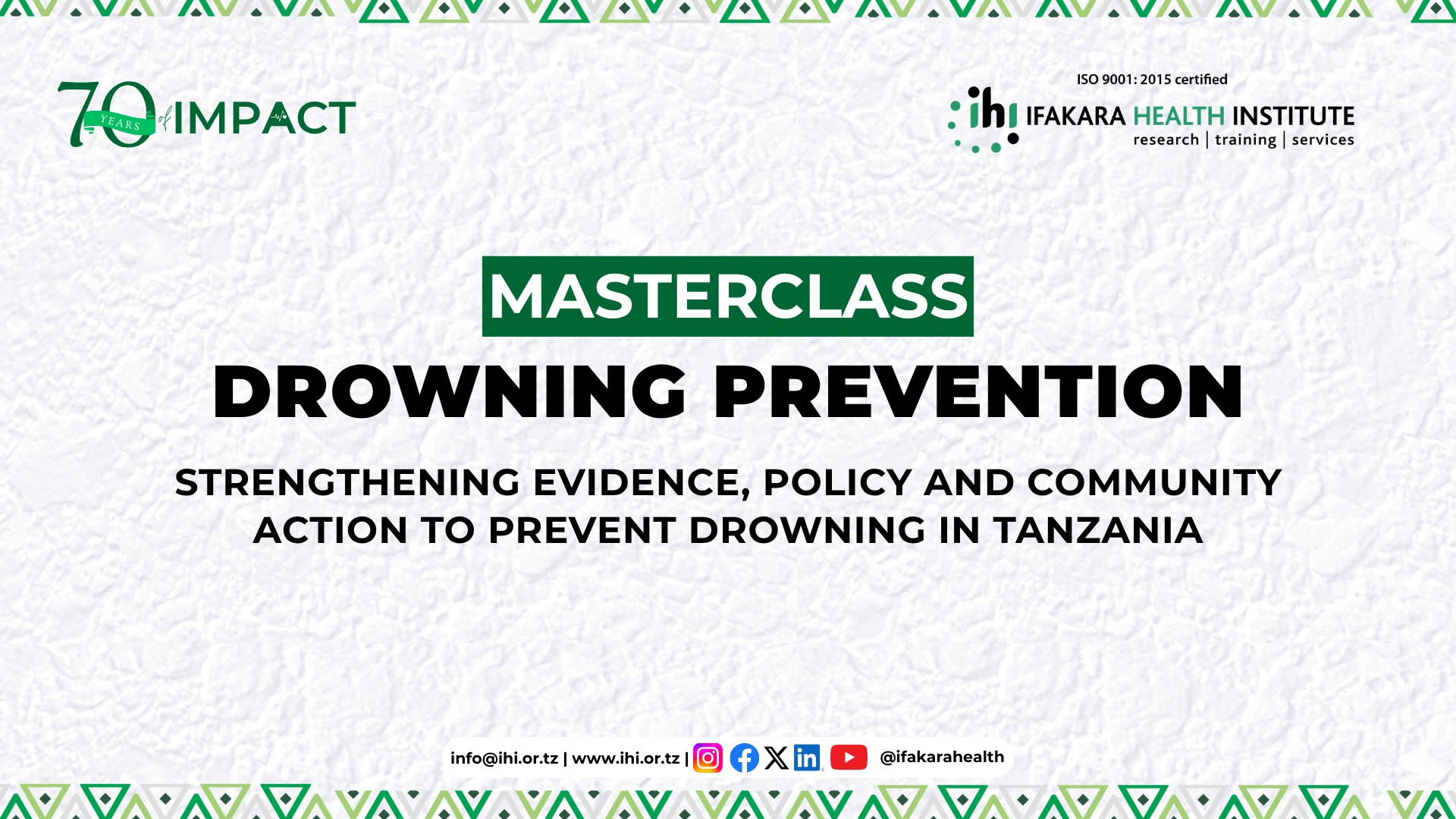
On July 30, 2026, Ifakara Health Institute (IHI) convened stakeholders for a national Drowning Prevention Masterclass to raise awareness and promote evidence-based solutions to prevent drowning in Tanzania.
The virtual event brought together speakers from IHI, the Royal National Lifeboat Institution (RNLI), the Tanzania Fire and Rescue Force, and the Environmental Management and Economic Development Organization (EMEDO).
Held as part of IHI’s 70th Anniversary celebrations and in recognition of World Drowning Prevention Day, commemorated annually on 25 July, the masterclass focused on the theme: “Understanding the Problem, Sharing Solutions and Inspiring Action.” The session explored the burden of drowning, shared research findings, and highlighted practical approaches to reducing preventable deaths.
Opening the event, IHI Director of Science, Dr Ally Olotu, emphasized the importance of collaboration and translating research evidence into action to address drowning as a public health challenge.
The Global and National Burden of Drowning
Drowning remains a major yet neglected cause of injury-related deaths worldwide, claiming more than 300,000 lives annually, with over 90% occurring in low- and middle-income countries where limited access to water safety education, rescue services, and emergency care increases vulnerability.
In Tanzania, drowning risks are heightened by the country’s extensive coastline, large lakes including Victoria, Tanganyika, and Nyasa, and numerous rivers, dams, and wetlands. Communities that depend on water for transport, fishing, agriculture, and daily livelihoods are among the most affected.
Why Drowning Happens in Daily Life
Dr Becky Sindall, Senior International Advocacy Manager at RNLI, highlighted that most drownings do not occur during recreational swimming but during everyday activities such as collecting water, washing clothes, fishing, or travelling by boat.
She noted that young children are particularly vulnerable around unmonitored water sources, while overcrowded boats, floods, and limited swimming skills increase risks. Dr Sindall emphasized that drowning is preventable through simple, affordable interventions, including child supervision, lifejacket use, and basic swimming and water safety education.
Understanding the Drowning Burden in Tanzania
Presenting IHI research findings, Research Scientist Sigilbert Mrema shared that approximately 5.8 out of every 100,000 Tanzanians die from drowning annually, with men facing twice the risk of women due to high-risk occupations such as fishing.
Children under five, young adults aged 15–24, and older adults remain among the most vulnerable groups. High-risk areas include communities around Lake Victoria, including Geita District, as well as areas affected by seasonal rivers and open wells.
Mrema highlighted that 85% of drowning deaths occur within communities rather than health facilities, meaning many cases are not captured in official medical records.
Strengthening Emergency Response and Public Safety
Representing the Tanzania Fire and Rescue Force, Maulo Kigahe outlined challenges in responding to emergencies across the country’s coastline and major water bodies. Drawing from rescue experiences, including the recovery of 540 fishermen on Lake Rukwa in January 2025, he stressed the importance of early warning systems, trained local responders, and improved rescue capacity.
He called for stronger implementation of Tanzania’s National Drowning Prevention Strategy, water safety education in schools, enforcement of marine transport regulations, and expansion of rescue equipment across districts.
Community-Led Action Around Lake Victoria
Arthur Mgema, Programme Manager at EMEDO, shared lessons from community-based drowning prevention initiatives implemented with RNLI support. Through community-led approaches, lifejacket use increased to 82% in targeted island communities such as Busekera and Goziba.
The initiatives also trained more than 500 fishers and 90 women fish processors, while installing solar-powered weather boards to provide storm alerts before boats depart. Mgema emphasized that community ownership is key to achieving sustainable change.
A Shared Commitment to Save Lives
The masterclass concluded with a shared commitment among stakeholders to transform evidence into action. Participants highlighted the need to identify high-risk areas, strengthen safety measures, improve emergency response systems, and empower communities with practical skills and resources.
Preventing drowning in Tanzania will require coordinated action across government, rescue services, researchers, and communities—including promoting lifejacket use, improving awareness of weather risks, and expanding swimming and water safety education.
We're a Registered Charity Organization in Tanzania
Ifakara Health Institute (IHI) is officially recognized as a charitable organization under the Income Tax Act. Certification issued on 20 March 2025 and valid until 31 December 2030.
Ifakara Health Institute (IHI) is officially recognized as a charitable organization under the Income Tax Act. Certification issued on 20 March 2025 and valid until 31 December 2030.