

MOSQUITOES: Why some spread malaria more than others
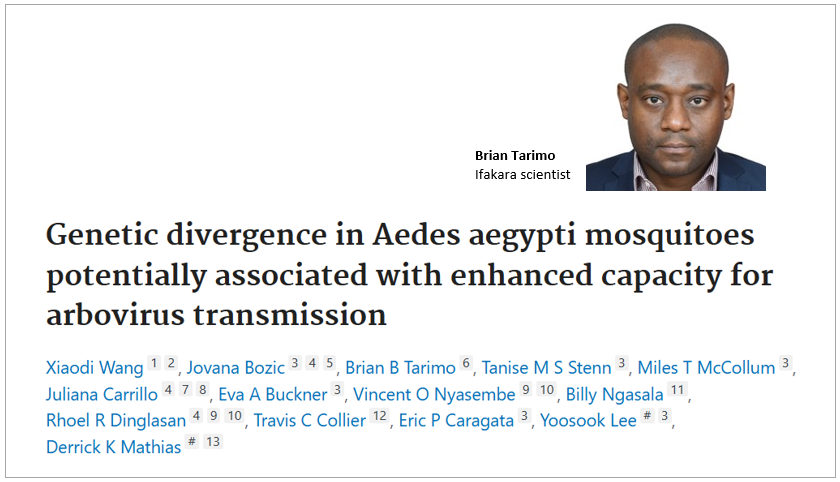
Mosquitoes of the same species may not always have the same ability to spread disease. A new study has found that genetic differences between populations of Aedes aegypti mosquitoes may influence how they transmit viruses such as dengue—a finding that could help scientists better understand why some regions face a higher risk of mosquito-borne outbreaks.
Published this month in BMC Biology, the research compared Aedes aegypti mosquito populations from coastal Tanzania and Florida, USA. The study included contributions from Ifakara Health Institute scientist Brian Tarimo, alongside researchers from the University of Florida.
"Aedes aegypti mosquitoes have evolved from feeding mainly on animals in sub-Saharan Africa forests to preferring humans, threatening nearly half of the world's population. This study shows the mosquito populations from the USA and East Africa differ genetically, influencing how they carry and transmit viruses," the researchers note.
Why does this matter?
Dengue cases have increased in many parts of the world in recent years, including regions where the disease was previously less common. Understanding the genetic factors that influence mosquito transmission could improve disease surveillance and control efforts.
This study also provides new insights into the evolution of one of the world's most important disease-carrying mosquitoes, offering researchers new clues about the biological traits that may influence the spread of arboviruses.
“Our analyses contribute to the growing literature on Ae. aegypti ecotype evolution as it expanded through SSA and out of Africa. These natural genetic changes may affect how well the mosquitoes can spread diseases,” the authors note.
A closer look at the dengue mosquito
Aedes aegypti is the main mosquito responsible for spreading dengue, as well as other viral diseases including Zika, chikungunya, and yellow fever.
Although these mosquitoes belong to the same species, populations from different parts of the world have evolved under different environmental conditions. In this study, scientists wanted to know whether those genetic differences could affect how mosquitoes spread viruses.
Comparing mosquitoes across two continents
To answer that question, researchers exposed mosquitoes collected from Tanzania and Florida to dengue virus under laboratory conditions and monitored how the virus infected and spread within the mosquitoes.
The study found that mosquitoes from Florida were more susceptible to dengue infection than those from Tanzania. They developed higher levels of the virus and allowed it to spread more rapidly through their bodies, suggesting differences in their potential to transmit dengue.
Linking mosquito genetics to disease transmission
Using genetic analysis, the scientists identified more than 1.6 million genetic differences between the two mosquito populations.
Some of these differences were found in genes involved in immune responses, metabolism, feeding behaviour and other biological processes that influence how mosquitoes interact with viruses.
The researchers say these findings add to growing evidence that Aedes aegypti populations have continued to evolve as they spread across Africa and into other parts of the world. These naturally occurring genetic changes may help explain why some mosquito populations are more efficient at transmitting disease than others.
As dengue and other arboviruses continue to threaten communities worldwide, understanding the mosquito itself may be one of the keys to preventing future outbreaks.
Read the publication here.
We're a Registered Charity Organization in Tanzania
Ifakara Health Institute (IHI) is officially recognized as a charitable organization under the Income Tax Act. Certification issued on 20 March 2025 and valid until 31 December 2030.
Ifakara Health Institute (IHI) is officially recognized as a charitable organization under the Income Tax Act. Certification issued on 20 March 2025 and valid until 31 December 2030.