
DIGITAL HEALTH: AI tool can help identify high-risk pregnancies earlier, improve maternal care
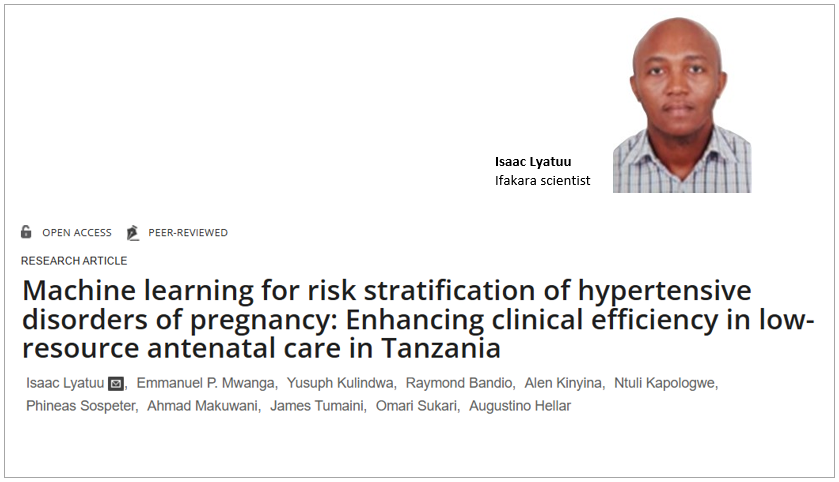
A new study shows that Artificial Intelligence (AI) can help transform antenatal care in Tanzania by enabling health workers to identify pregnant women at higher risk of developing life-threatening hypertensive disorders of pregnancy (HDP)—one of the country's leading causes of maternal deaths.
Published recently in PLOS Digital Health, the study demonstrates how a machine learning model can use routinely collected antenatal care records to identify women at increased risk of HDP. The findings offer a promising approach to improving maternal healthcare in busy, low-resource settings where healthcare workers often have limited time and resources to assess every patient in detail.
Study led by Tanzanian researchers
The study was led by Isaac Lyatuu, affiliated with the Prime Health Initiative Tanzania and Ifakara Health Institute, with co-authors Emmanuel Mwanga and Alen Kinyina from Ifakara Health Institute.
The research team also included collaborators from Prime Health Initiative Tanzania, the Ministry of Health Tanzania, the President’s Office – Regional Administration and Local Government, and the Regional Health Secretariat in Geita.
Why the study matters
Early identification and timely management remain among the most effective ways to prevent severe complications from hypertensive disorders of pregnancy. However, in many low-resource settings, women are often diagnosed only after symptoms become severe.
This study demonstrates how AI can help address practical healthcare challenges and also the potential of Tanzania’s growing digital health infrastructure. Because the model was developed using routinely collected health information, it could be integrated into existing digital health platforms to support antenatal care and help health workers make more informed decisions.
Addressing a major maternal health challenge
Hypertensive disorders of pregnancy affect an estimated 5–10% of pregnancies in Tanzania and contribute to approximately 34% of direct maternal deaths. Addressing this burden requires new approaches that move beyond routine monitoring toward proactive identification of women who may need closer follow-up.
Recognizing this challenge, the researchers explored whether machine learning could provide an automated risk assessment tool to support healthcare workers in identifying women who require closer monitoring.
Training AI using routine health data
The researchers analyzed 337,027 routine antenatal care records collected through Tanzania’s Unified Community System (UCS) between 2023 and 2024 across 23 regions. These records represented 187,438 pregnant women, with information from multiple clinic visits combined to capture patterns in maternal health over time.
The team compared five machine learning models to determine which approach could best predict the risk of hypertensive disorders of pregnancy. The best-performing model, known as Extreme Gradient Boosting (XGBoost), was further tested using an independent validation dataset containing more than 120,000 additional patient records.
High accuracy with a safety-first approach
The XGBoost model achieved an overall accuracy of 90.1% and successfully identified every high-risk patient included in the validation dataset, achieving 100% sensitivity.
The model classified 12,603 women as high risk, including some who might have been overlooked through routine clinical assessment.
In clinical practice, identifying additional women for further evaluation may be preferable to missing those at genuine risk of life-threatening complications. As the authors explain, “While this high-sensitivity approach flags some patients who ultimately do not develop complications, it acts as a highly effective safety net.”
Supporting—not replacing—health workers
The researchers note that the AI tool is designed to support healthcare professionals, not replace them. By identifying women who may need closer monitoring before clinical consultations, the system could help health facilities improve patient flow and ensure limited specialist attention is directed to those who need it most.
As Tanzania continues to expand its digital health infrastructure, AI-based solutions could offer new opportunities to improve efficiency, strengthen early detection, and ultimately contribute to better maternal health outcomes—particularly in settings where healthcare resources remain limited.
Read the publication here.