

REVIEW: Scientists call for transparency when setting future research priorities
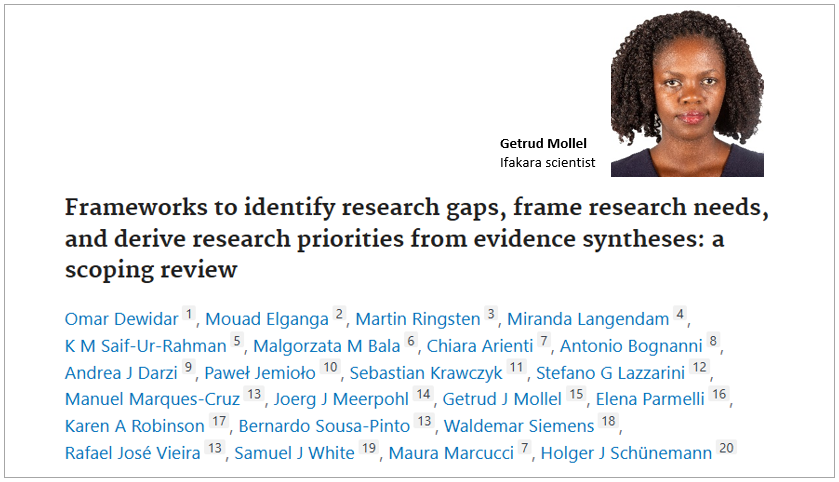
Scientists are calling for a more transparent way of deciding which health questions should be investigated next, after a new review found that current approaches vary widely and often lack clear methods for setting priorities.
After screening 8,563 records identified through electronic database searches, researchers found that while many frameworks describe how to identify possible research gaps, few provide detailed methods for deciding which gaps deserve urgent attention. The findings raise concerns that some important health questions may not receive the attention they deserve.
“This scoping review mapped frameworks for identifying research gaps, translating them into research needs, and establishing priorities from evidence syntheses. Most frameworks outlined multistep approaches that focused on describing research needs, but few offered guidance on how to determine the underlying rationale for a research gap — specifically, what qualifies as a gap in the first place,” the authors wrote.
Why it matters
Every year, governments, research institutions, and funding agencies invest billions of dollars in health research. With limited resources available, ensuring that investments address the most important unanswered questions is essential.
A more systematic approach to identifying research gaps could help scientists, funders, and policymakers make better decisions — ensuring future studies address priorities that can have the greatest impact on patients, health systems, and communities.
Global team highlights need for better tools
The review brought together 25 researchers from universities, evidence synthesis centres, and health research institutions from Canada, Italy, Poland, Portugal, Germany, the Netherlands, Sweden, Ireland, the United States, Australia, and Tanzania. The collaboration included Getrud Mollel from the Ifakara Health Institute.
Published recently in the Journal of Clinical Epidemiology, the review examined 14 frameworks identified from 17 publications that are used to identify research gaps from systematic reviews – studies that combine findings from multiple research studies to provide a broader picture of existing evidence.
Existing approaches lack consistency and transparency
Although several frameworks are available, researchers found that many lacked structured methods for explaining why evidence is considered insufficient and how specific research questions should be prioritized.
Only a small number of frameworks provided approaches for characterizing research gaps. Six explicitly investigated the nature of research gaps, while only four included methods for prioritizing future research needs.
The authors also found that many frameworks lacked sufficient operational guidance, making it difficult for researchers and decision-makers to consistently apply them.
A step towards smarter research investment
The researchers conclude that stronger guidance is needed to ensure future studies focus on the most important unanswered questions.
“Frameworks for identifying research gaps from evidence syntheses are diverse, poorly and inconsistently structured, and often lack explicit methods for identifying needs and prioritization,” the authors wrote.
They argue that standardized guidance could improve clarity, strengthen decision-making, and help ensure that limited research resources are directed towards questions with the greatest potential to improve health outcomes.
Read the publication, here.