
VISIT: Education Minister calls for stronger research ecosystem to drive local health solutions
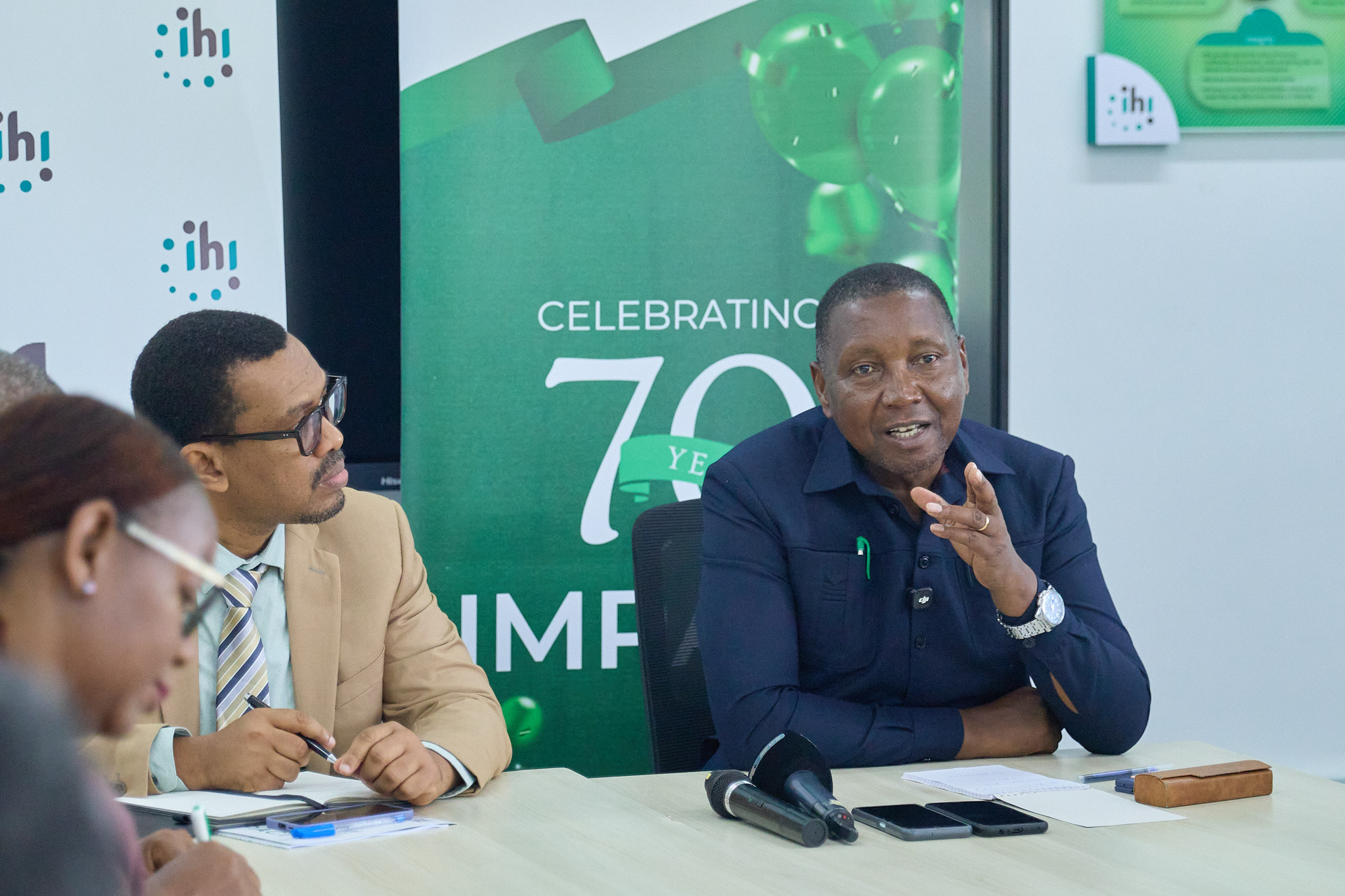
On 8 July 2026, the Ifakara Health Institute (IHI) hosted a high-level delegation led by the Hon. Prof. Adolf Mkenda, Minister of Education, Science and Technology (MoEST), during a visit to its Bagamoyo site to learn more about the Institute’s research, innovations, and contribution to improving health outcomes in Tanzania.
The Minister, accompanied by seven senior officials from MoEST, and Dr Amos Nungu from the Tanzania Commission for Science and Technology (COSTECH), was welcomed by Ifakara’s Director of Science, Dr Ally Olotu, alongside Head of Training and Capacity Building Department Dr Kafuruki Shubis, Head of Clinical Trials Dr Grace Mwangoka, Business Development and Partnerships Specialist Dr Zawadi Mageni Mboma, and research scientists Dr Samson Kiware and Dr Dickson Lwetoijera.
The delegation received an overview of Ifakara’s work, including its 70-year contribution to health research, capacity building, and innovation in Tanzania, before touring key facilities at the Bagamoyo site. The visit included the Clinical Trials Facility, Laboratory, Transmission Zero project activities, and training facilities, where researchers shared insights into the ongoing work.
Strengthening Tanzania’s research and innovation ecosystem
During the visit, Hon. Prof. Mkenda emphasized the need to strengthen Tanzania’s research and innovation ecosystem through increased investment in scientific discovery, particularly within universities and research institutions.
The Minister called for greater efforts to build local research capacity by expanding research programmes, strengthening infrastructure, and investing in modern scientific equipment to reduce dependence on external resources and grants. He encouraged universities and research institutions to develop a stronger culture of innovation and self-driven scientific inquiry that addresses Tanzania’s priorities.
He also highlighted the importance of investing in the next generation of scientists and innovators through initiatives such as the Samia Scholarship Programme, noting the potential to expand opportunities in emerging fields such as biotechnology and other areas critical to advancing Tanzania’s scientific capabilities.
Advancing locally driven health solutions
The Minister called for increased efforts to harness Tanzania’s indigenous knowledge, natural resources, and locally available materials to develop innovative health solutions, including medicines that respond to local health needs.
He emphasized that research should extend beyond discovery and laboratory findings to include pre-clinical studies, clinical development, manufacturing, and commercialization. Building a complete pharmaceutical value chain, he noted, would enable Tanzania to transform scientific discoveries into products and solutions that benefit communities.
Strengthening collaboration to translate research into impact
Discussions during the visit also highlighted the importance of closer collaboration between government, research institutions, universities, the health sector, and industry to accelerate the translation of scientific discoveries into policies, products, and technologies that benefit communities.
For IHI, the visit reaffirmed the value of sustained partnerships in advancing science that responds to national priorities while strengthening Tanzania’s research and innovation ecosystem.
As the Institute celebrates 70 years of science in service of health, IHI remains committed to conducting high-quality research, building scientific capacity, and developing evidence-based innovations that improve health and transform lives in Tanzania, across Africa, and beyond