
CHILD HEALTH: Study links free education policies to lower mortality across 20 countries
Making basic education free and compulsory does more than increasing school attendance—it can save children's lives, according to a new international study that also warns that learning disruptions caused by the COVID-19 pandemic could have lasting consequences for future generations.
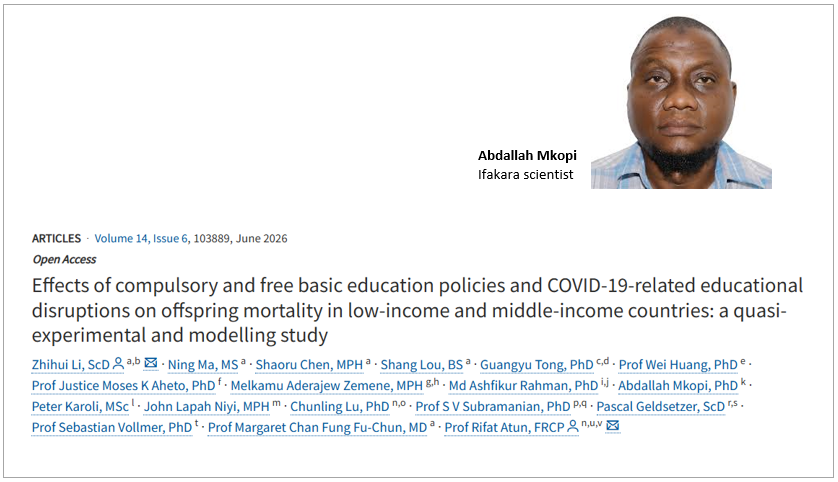
In 2024, researchers, including Ifakara Health Institute's Dr. Abdallah Mkopi, analyzed data collected from the nationally representative Demographic and Health Surveys between 1986 and 2022 from 20 low- and middle-income countries. The analyzed data was searched online up to June 30, 2024. They found that children born to parents who benefited from free and compulsory education were significantly more likely to survive beyond their fifth birthday than those whose parents did not have the same educational opportunities.
Published in The Lancet Global Health recently, the study found fewer deaths among newborns, infants and young children of both mothers and fathers exposed to education reforms. The greatest improvements were seen among poorer households, suggesting that expanding access to education can also help reduce health inequalities.
Why it matters
Education doesn't just shape futures—it saves lives. This study provides compelling evidence that free and compulsory schooling can reduce child mortality, while warning that COVID-19 learning losses could put future generations at greater risk.
They also raise fresh concerns that learning losses from the COVID-19 pandemic could reverse decades of progress in child survival unless countries urgently invest in helping students recover. The message is clear: protecting education today could save the lives of the next generation.
How education improves child health outcomes
Education has long been linked to better health, but establishing a direct causal relationship has been difficult. By comparing populations before and after the introduction of compulsory education policies, the researchers provide strong evidence that these reforms contributed to improved child survival.
The benefits extend well beyond the classroom. Parents with more education are generally better informed about pregnancy care, childhood vaccinations, nutrition, hygiene and when to seek medical treatment. They are also more likely to access healthcare services and ensure their children are vaccinated, adopt healthier practices, and seek timely medical care.
COVID-19 learning losses may have long-term health consequences
The study also highlights a major emerging challenge. Using mathematical modelling, the researchers projected the long-term impact of COVID-19-related school closures and learning disruptions.
They estimate that, without effective learning recovery programmes, reduced educational attainment could contribute to hundreds of thousands of additional deaths among children under five between 2030 and 2050. Most of the projected increase is attributed to lost classroom instruction rather than permanent school dropouts.
The findings suggest that the full health impacts of the pandemic may not become apparent until today's students become tomorrow's parents.
Investing in education is investing in health
The researchers call for urgent investment in learning recovery and measures that protect education during future crises. They argue that safeguarding education is not only an educational priority but also a public health investment that can save lives.
The study adds to growing evidence that policies beyond the health sector can have profound impacts on population health. As countries work to reduce preventable child deaths, the researchers conclude that ensuring every child has access to quality basic education may be one of the most effective long-term investments governments can make.
Read the publication, here.