

MALARIA: Study in Tanzania links evening outdoor activity to higher infection risk
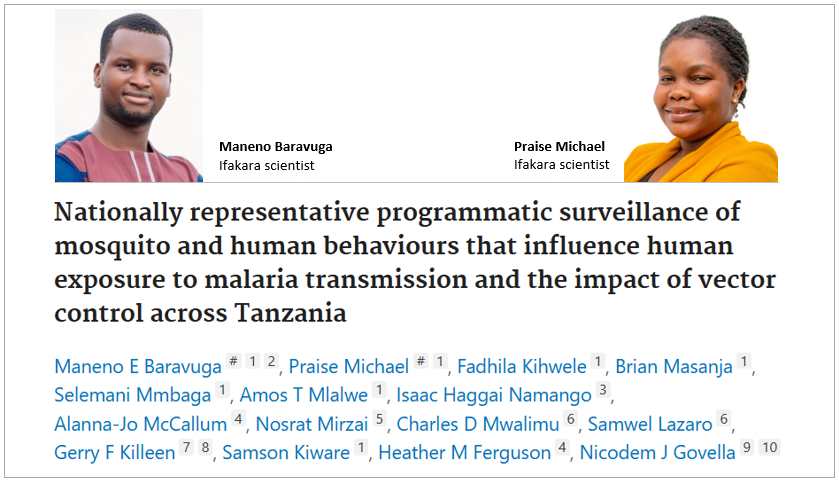
A new study by scientists from Ifakara Health Institute and partners has found that everyday human behaviour—especially time spent outdoors in the early evening—may be influence malaria transmission across Tanzania, revealing gaps in current protection measures.
Published recently in Malaria Journal, the study covered 25 districts nationwide and combined mosquito surveillance with detailed monitoring of people’s daily routines and bed net use. It is the first nationally representative study in Tanzania to examine mosquito exposure and human behaviour side by side.
Evening outdoor activities increase exposure
One of the key findings was that many people, particularly adolescents and adults, spend time outdoors during the early evening hours when malaria mosquitoes are already active. This means exposure often occurs before people go indoors to sleep under insecticide-treated nets, which remain the country’s main prevention tool.
The study also found that adolescent boys were less likely to use bed nets compared to other groups, potentially increasing their risk of infection.
Mosquitoes are adapting differently
Researchers also observed that malaria-carrying mosquitoes are not evenly distributed across the country. While Anopheles arabiensis was found widely across the country, the more efficient malaria transmitters—Anopheles gambiae sensu stricto and Anopheles funestus sensu stricto—were only found in specific hotspots.
Importantly, the mosquitoes also behave differently. Anopheles arabiensis was more likely to bite outdoors and feed on both humans and animals, particularly cattle, while the more dangerous species showed a stronger preference for human blood.
Researchers say these behavioural differences directly influence how malaria is transmitted and reduce the effectiveness of current control tools that focus mainly on indoor protection.
Why the findings matter
Over the past two decades, Tanzania has made major progress in reducing malaria, largely through widespread use of insecticide-treated nets and other control measures.
However, despite these advances, researchers warn that current tools alone are not enough. While bed nets remain essential, they emphasize additional strategies are needed to protect people who are outside during peak mosquito biting times.
New surveillance approach could strengthen response
The researchers suggest that combining entomological and behavioural surveillance could help health authorities better target interventions, particularly for high-risk groups, and guide the development of tools that offer protection outside the home.
As Tanzania continues efforts toward malaria elimination, understanding how human behaviour interacts with mosquito behaviour will be critical to closing remaining protection gaps and accelerating progress toward malaria elimination.
Ifakara study team and partners
The study was led by Maneno Baravuga and Praise Michael from Ifakara Health Institute, working with Fadhila Kihwele, Brian Masanja, Selemani Mmbaga, Amos Mlalwe, Samson Kiware and Nicodem Govella.
The team worked alongside partners from Swiss Tropical and Public Health Institute, University of Glasgow, Tanzania’s National Malaria Control Programme and University College Cork.
Read the publication here.