

COMMENTARY: First ever malaria vaccine shows success in reducing child mortality in Africa
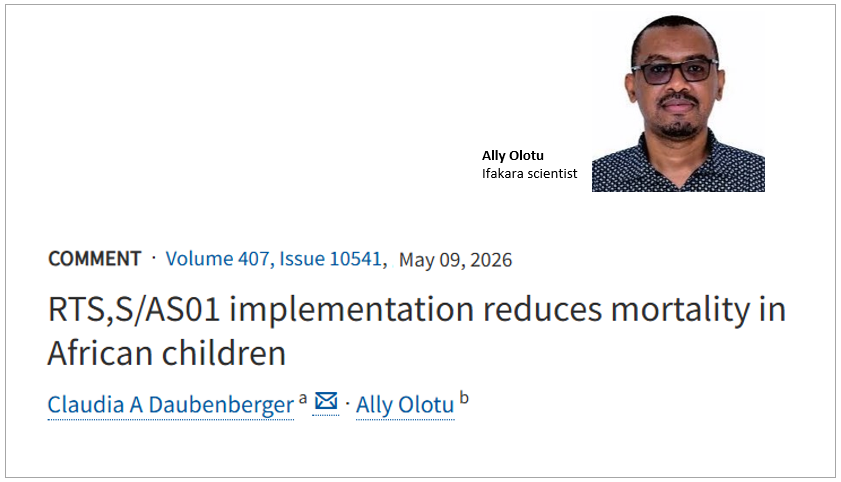
A commentary published recently in The Lancet highlights growing evidence from Africa showing that the RTS,S/AS01 malaria vaccine is helping reduce deaths among children in malaria-affected communities, marking another important milestone in the global fight against malaria.
The commentary, titled RTS,S/AS01 implementation reduces mortality in African children, was co-authored by Ally Olotu from the Ifakara Health Institute and Claudia Daubenberger of the University of Basel.
First vaccine against a parasitic disease
The authors discuss the impact of the RTS,S/AS01 vaccine, also known as Mosquirix, which was recommended by the World Health Organization in 2021 for widespread use among children living in areas with moderate to high malaria transmission.
“The RTS,S/AS01 vaccine represented not only the first vaccine approved against any parasitic human disease but also a concrete step towards reducing the incidence of clinical malaria and its associated mortality,” the authors wrote.
Malaria remains one of the leading causes of illness and death among children under five in sub-Saharan Africa, despite decades of progress in prevention and treatment.
Supporting existing malaria control efforts
According to the commentary, evidence emerging from vaccine implementation programmes in African countries shows that the malaria vaccine is contributing to lower child mortality, particularly in regions heavily affected by malaria transmission.
The authors note that the vaccine complements existing malaria control measures such as insecticide-treated bed nets, testing and treatment. They also emphasize the importance of sustained investment in vaccination programmes and integrated malaria prevention strategies to protect vulnerable children across Africa.
Ifakara’s contribution to global malaria research
Olotu’s contribution reflects Ifakara Health Institute’s continued role in advancing malaria research and supporting global efforts to develop and evaluate new tools for malaria prevention and control.
Read the commentary here.