

INNOVATION: AI tool shows promise in identifying malaria mosquitoes fast
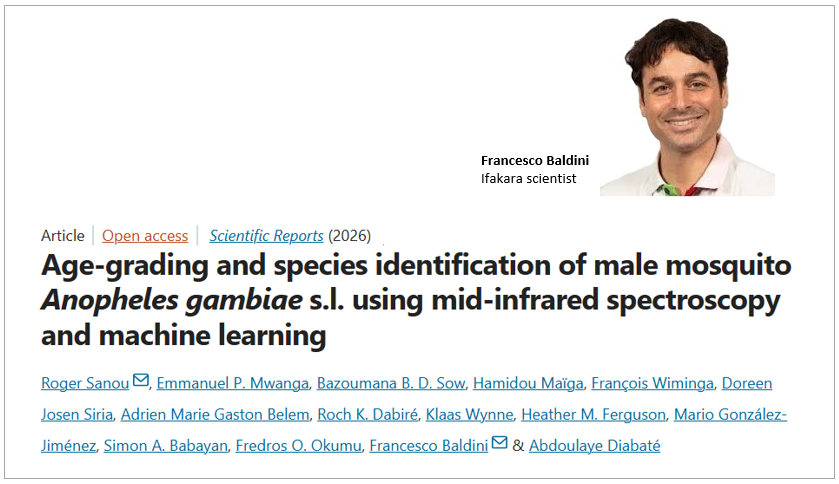
Scientists have tested an artificial intelligence (AI)-powered tool designed to identify and estimate faster than before the age of malaria mosquitoes — a method researchers say could help support future malaria control efforts.
Faster way to study mosquitoes
The study, published recently in Scientific Reports, evaluated a technology that combines mid-infrared light scanning with machine learning to analyze male mosquitoes from the Anopheles gambiae group, one of Africa’s main malaria vectors.
Researchers say the method could provide a faster and cheaper alternative to conventional laboratory techniques used to study mosquitoes.
The study involved researchers from Ifakara Health Institute and partners including the University of Glasgow and the Institut de Recherche en Sciences de la Santé.
Why this matter
Most malaria control efforts focus on female mosquitoes because they spread the disease through bites. However, several emerging mosquito-control strategies depend on releasing large numbers of male mosquitoes into the environment.
Scientists say accurately identifying the species and age of these male mosquitoes is important because it helps scientists assess how well the insects survive, compete and reproduce after release. Faster monitoring tools could also make mosquito surveillance cheaper and easier in malaria-endemic countries.
More than 2,000 mosquitoes analyzed
The team analyzed more than 2,100 mosquitoes raised in laboratories and semi-field environments in Burkina Faso. Using chemical signatures detected on mosquito bodies, the AI system was trained to distinguish between mosquito species and estimate their age.
In laboratory conditions, the system identified mosquito species with about 86% accuracy and estimated mosquito age with 85% accuracy, according to the study.
Challenges in real-world conditions
Performance was lower in semi-field settings, where mosquitoes experience more environmental variation. However, researchers improved the results using a machine learning technique known as transfer learning.
“Incorporating semi-field samples through transfer learning improved accuracy to 73% for species and 70% for age, underscoring both the limits of laboratory-only models and the value of transfer learning for enhancing generalizability in field settings,” the scientists noted.
Moreover, they say the findings suggest the technology could help monitor mosquito populations used in emerging malaria-control strategies, such as sterile insect techniques, gene drive technologies and Wolbachia-based approaches.
Ifakara scientists behind the study
Scientists from Ifakara Health Institute involved in the study include Emmanuel Mwanga, Doreen Siria, Heather Ferguson, Fredros Okumu and Francesco Baldini, who also served as a supervisor.
Read the publication here.