

HIV: Study raises concern over drug resistance in young patients
A new study has found that many children and adolescents living with HIV in Tanzania and Lesotho who are not responding well to treatment are carrying drug-resistant strains of the virus. However, researchers say resistance alone does not explain all cases of treatment failure.
The findings, published in the Journal of Antimicrobial Chemotherapy recently, come from a multi-country clinical trial known as GIVE MOVE, which followed young patients experiencing “viral failure” — meaning the virus remained active in their blood despite taking antiretroviral therapy (ART).
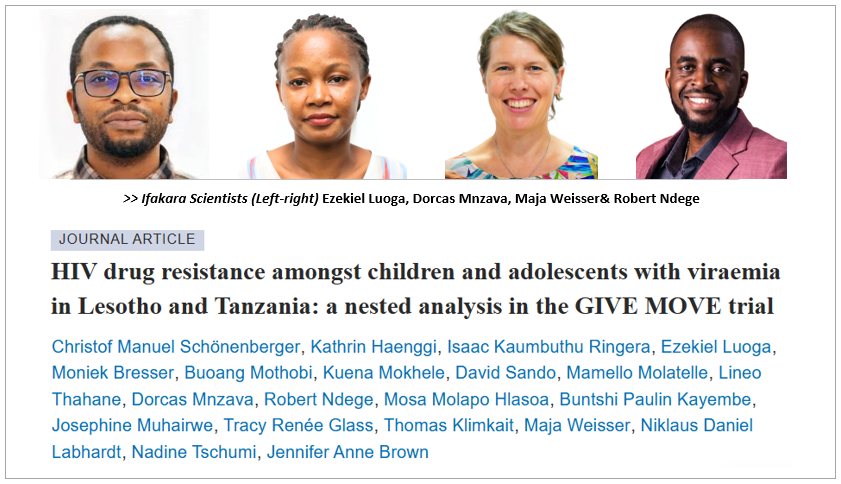
The research was conducted at 10 healthcare facilities in Lesotho and Tanzania between March 2020 and July 2023. It was led by a team of scientists from Switzerland, Lesotho, and Tanzania, including scientists from the Ifakara Health Institute: Ezekiel Luoga, Dorcas Mnzava, Robert Ndege, and Maja Weisser.
Why this matter
The findings matter because they highlight a growing challenge in HIV treatment: failure is not only about access to medicines, but also about how the virus responds to them.
If drug resistance is not detected early, children and adolescents may continue taking medicines that are no longer effective. This allows the virus to multiply, weakening the immune system over time and increasing the risk of illness, opportunistic infections, and the need for more complex and costly treatment regimens.
High levels of drug resistance detected
Scientists found that a large proportion of participants had HIV mutations that make the virus resistant to commonly used drugs.
In some cases, the virus showed resistance to at least one key antiretroviral medicine used in standard first-line treatment. This reduces the chances of successful viral suppression and limits available treatment options.
However, resistance was not universal, and the study suggests that other factors are also contributing to poor treatment outcomes.
Children and adolescents most affected
The findings are particularly concerning because they focus on children and adolescents, a group that relies heavily on long-term HIV treatment to survive and stay healthy.
The study also showed signs of weakened immune systems in some participants, reflected in low CD4 cell counts — an indicator that the immune system is weakening when the virus is not properly controlled.
Call for closer monitoring
The study authors stress the importance of routine viral load testing to quickly identify when treatment is failing.
They also call for stronger patient monitoring systems, improved adherence support to help young patients stay on effective treatment, and timely access to second-line medicines when resistance develops.
While HIV treatment has transformed survival over the past two decades, the study suggests that drug resistance remains a serious threat for some children and adolescents — and a reminder of the need for continued investment in HIV care systems.
Read the publication, here.