

IFAKARA@70: Treated bed nets – The intervention that reshaped global malaria control
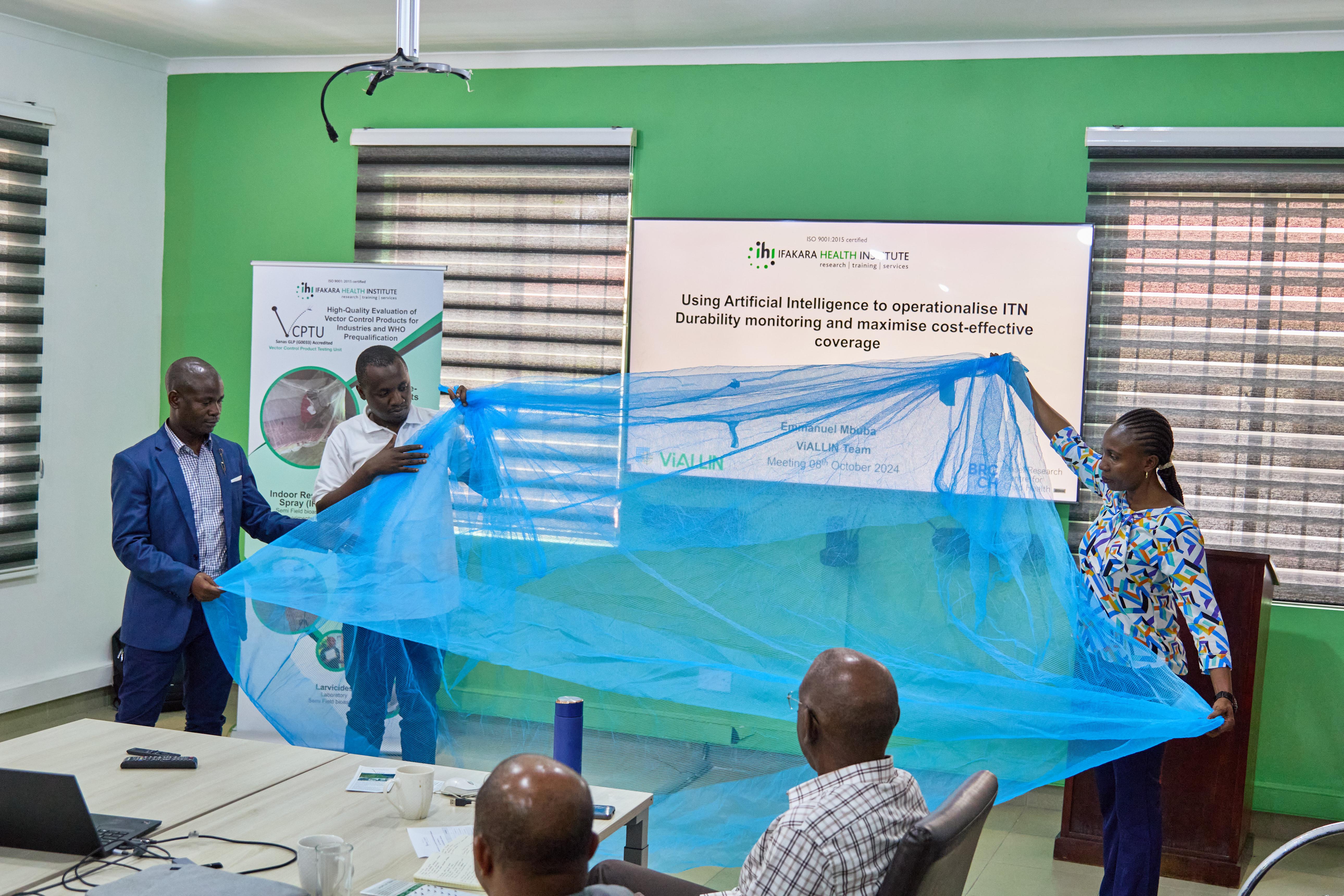
Seventy years after its founding, Ifakara Health Institute is celebrating more than longevity — it is marking a scientific legacy that helped change how the world sleeps. What began as community-based trials in rural Tanzania has grown into one of the most powerful global weapons against malaria: insecticide-treated bed nets.
At the turn of the millennium, malaria was relentless. In many parts of sub-Saharan Africa, nearly every child experienced repeated infections. Then came a quiet revolution — large-scale deployment of insecticide-treated nets (ITNs), backed by rigorous research.
Science in the field, not just the labs
Scientists at Ifakara were among the pioneers testing whether these simple tools could truly interrupt transmission in real-world conditions. Their studies demonstrated not only reduced mosquito bites, but dramatic declines in child mortality and infection rates when nets were widely used.
By the early 2000s, evidence from Tanzania and other endemic settings had reached global health decision-makers. Organizations such as the World Health Organization and the Centers for Disease Control and Prevention began recommending ITNs as a cornerstone of malaria control — a policy shift that would reshape prevention strategies worldwide.
Evidence that changed global policy
The results have been striking. Since 2000, malaria-endemic countries and partners have achieved more than a 50 percent reduction in malaria prevalence, alongside roughly a tenfold reduction in transmission intensity in some high-burden areas. According to the WHO, scale-up of vector control — especially ITNs and indoor residual spraying — accounts for the majority of these gains. Between 2000 and 2015 alone, WHO analyses estimated that over two billion insecticide-treated nets were distributed globally, preventing millions of cases and saving countless lives.
Research contributions from Ifakara helped answer key operational questions:
- How many households must use nets to achieve community-wide protection?
- How durable are treated nets in rural conditions?
- Can mass distribution campaigns reduce transmission even in high-intensity areas?
The “mass effect” concept
Answers from Tanzanian field studies showed that high coverage could protect entire communities, including those without nets — a concept now known as the “mass effect.” These findings strengthened global policy and accelerated donor investment.
The CDC notes that widespread ITN use can reduce malaria episodes by around 50 percent and child mortality by approximately 20 percent in high-transmission settings. Such evidence helped transform ITNs from experimental tools into standard global practice. Today, long-lasting insecticidal nets are recommended for everyone at risk of malaria, forming the backbone of prevention programs across Africa, Asia, and parts of Latin America.
The success story extends beyond numbers. It helped shift global confidence — from managing malaria to imagining its elimination. As improved diagnostics, medicines, and urbanization reinforced the trend, ITNs remained the single most influential intervention in reducing transmission.
More than a tool – it’s a turning point!
Now, as Ifakara marks 70 years, the milestone is not just institutional — it is global. The nets hanging above millions of beds from Tanzania to Southeast Asia carry a legacy of science tested in villages, refined through partnerships, and adopted by the world.
Sometimes the most powerful innovations are not complex technologies but simple ideas backed by strong science. Thanks in part to research from Ifakara, a treated net became more than fabric — it became a shield, a policy, and a promise that malaria elimination is no longer a distant dream, but a goal within reach.
Stay updated
Follow us here 👇 to stay updated — we’ll notify you whenever similar news, events and features are released.