

ENGAGEMENT: Ifakara at Zanzibar digital health conference to advance scalable innovation
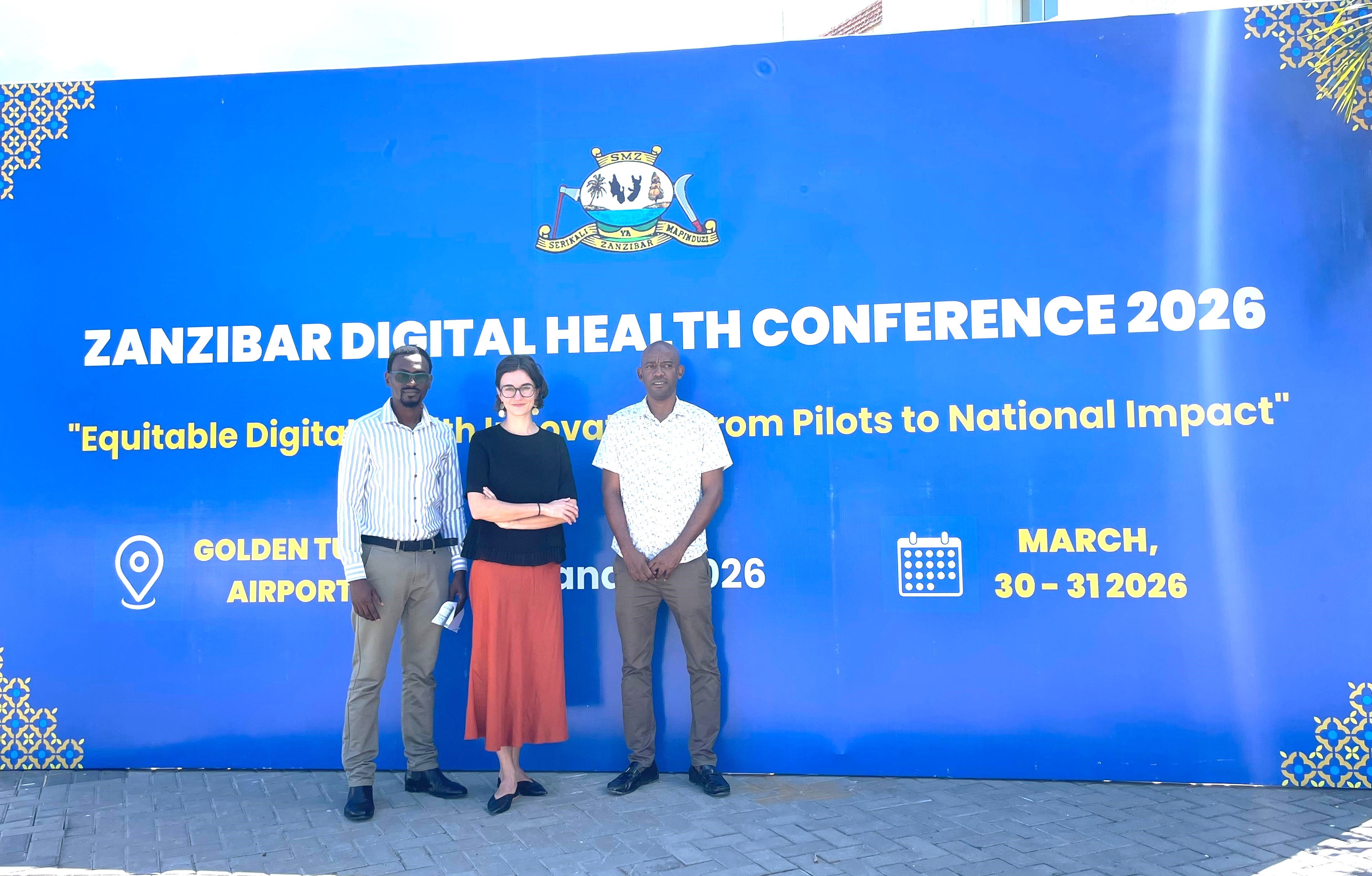
Scientists from the Ifakara Health Institute were among key participants at Zanzibar’s first-ever Digital Health Conference, contributing expertise and insights on how digital innovations can be scaled to strengthen health systems and improve patient outcomes.
Held from 30th–31st March 2026 at the Golden Tulip Hotel in Zanzibar, the landmark conference was convened under the theme: “Equitable Digital Innovations: From Pilots to National Impact.” The event brought together a diverse community of local, national, and international researchers, policymakers, investors, and digital health practitioners.
High-level commitment to digital health
The conference was graced by senior government leaders, including the Zanzibar Minister of State and Acting Minister for Health, Dr. Saada Mkuya, and the Zanzibar Minister of Information and Communication Technology, Mudrick Soraga.
Also, in attendance, were senior government officials such as Dr. Mngereza Mzee Miraji (Principal Secretary, Ministry of Health), PS Fatma Mabruk (Ministry of ICT), Dr. Said Seif Said (Director General, eGAZ), and Mr. John Mahundi (Head of Technology, Presidential Delivery Bureau).
Moving beyond pilots to real impact
A central message during the conference was the role of multisectoral collaboration in achieving equitable and scalable digital health solutions.
Participants emphasized that digital health is no longer just about technology—it is about systems, people, and partnerships. They underlined the importance of not only innovating, but to ensure that innovations are aligned with national priorities, integrated within existing systems, and capable of delivering impact at scale.
Zanzibar’s progress in building a coordinated digital health ecosystem was highlighted as a strong example of this transition, with increasing focus on interoperability, local ownership, and long-term sustainability.
Ifakara scientists engage in discussion at the conference
Scientists from Ifakara Health Institute were actively engaged in these discussions through the DAWA (Digital Antibiotic Stewardship and Training for Wahudumu wa Afya) Project.
Representing the Institute, Dr. Andrew Katende and Dr. Nina Emery, shared insights on the role of digital tools in improving healthcare delivery. Dr. Katende participated in a panel discussion on “Multisectoral Partnerships for Scalable Development,” where he emphasized the importance of collaboration:
“Sustainable digital health transformation cannot be achieved in silos. It requires coordinated efforts across government, the private sector, academia, and development partners,” Dr. Katende stressed.
The panel brought together representatives from government, UNICEF, PharmAccess, WAJAMAMA, the Health Improvement Project Zanzibar (HIPZ), and academia, each offering practical perspectives on scaling digital innovations.
Strengthening national systems through innovation
Discussions also focused on strengthening national platforms such as ZanEMR and integrating clinical decision support systems (CDSS) to improve quality of care.
Through the DAWA project, Ifakara Health Institute is working closely with the Ministry of Health Zanzibar to demonstrate how digital innovation can support antimicrobial stewardship.
Explaining about the DAWA project, Dr. Katende said, “The DAWA project is assessing an evidence-based clinical decision support system integrated within the national electronic medical record system. By leveraging existing digital infrastructure rather than creating parallel systems, this approach enhances feasibility, supports clinician adoption, and positions the intervention for seamless national scale-up.”
A strong foundation for the future
The conference concluded with a unifying message aligned with its theme: equitable digital innovations must move beyond pilot phases to achieve national impact.
As Zanzibar continues to advance this agenda, the inaugural conference sets a strong foundation for sustained collaboration, innovation, and improved health outcomes across the region and beyond