

MALARIA: Climate change driving disease fears in Tanzania’s rural communities
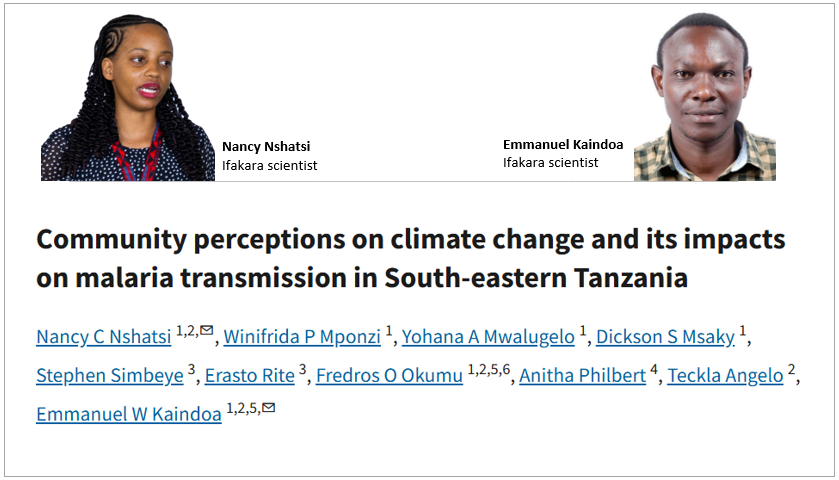
Communities in south-eastern Tanzania are increasingly linking changing weather patterns to a rise in malaria, according to a new study.
The research, published on the Malaria Journal, found that many people have observed shifts in rainfall, more frequent flooding and changing seasons—conditions they say are contributing to an increase in mosquitoes and higher malaria risk.
Most respondents said environmental changes have become more noticeable in recent years, affecting both daily life and farming activities. Overall, 86% reported experiencing climate-related changes, alongside what they described as a rise in mosquito-borne diseases.
Why it matters
Malaria remains a major public health challenge in Tanzania, and climate change is expected to make control efforts more complex. The study underscores a critical gap: while communities are already noticing the risks, they are not receiving enough support to respond effectively.
It concludes that “integrating community perspectives and local knowledge into climate-adaptation and malaria-control strategies” will be essential to building resilience.
Study led by Tanzanian researchers
The study was led by Nancy Nshatsi and supervised by Emmanuel Kaindoa – all from the Ifakara Health Institute. These researchers from Ifakara also contributed to the study: Winifrida Mponzi, Yohana Mwalugelo, Dickson Msaky, Fredros Okumu and Emmanuel Kaindoa. Other contributors came from the Nelson Mandela African Institute of Science and Technology, Ifakara Town Council and the University of Dar es Salaam.
The researchers say malaria transmission is “highly sensitive to climatic variability”, with changes in temperature and rainfall directly affecting mosquito breeding and parasite development.
Rising concern over malaria risk
The study found that about two-thirds (67.5) of participants recognized a connection between climate change and malaria transmission.
Around 70% of respondents said malaria cases are higher during the rainy season, raising concerns that changing weather patterns are increasing transmission.
“Perceived vulnerability was high,” the researchers noted, with many communities believing they are increasingly at risk of vector-borne diseases.
Information gap remains a challenge
Despite widespread awareness, access to information remains limited.
Only about a quarter of respondents said they regularly receive updates on climate and health. However, demand for information is high, with nearly all participants (96.6%) expressing a desire for more guidance.
Researchers highlighted “the need for targeted community awareness and education on climate-related malaria risks”.
Call for community-centred responses
The findings suggest that tackling malaria in a changing climate will require more than traditional interventions.
Researchers argue that combining scientific approaches with community knowledge could lead to more effective and locally relevant solutions.
As climate pressures grow, the message from the study is clear: communities on the front line must play a central role in shaping the response.
Read the publication here.