

#IFAKARAWOMEN@70: 41% — and powering the future of science
At first glance, it is just a number – three hundred. But inside the walls and field stations of Ifakara Health Institute, that number carries ambition, resilience, and the steady rhythm of scientific discovery.
As of February 2026, the Institute’s workforce stands at 736. Of these, 300 (that’s 41 per cent) are women. It is a figure that speaks quietly yet powerfully — not only of representation, but of presence. Of contribution. Of influence.
What 41% looks like in motion
Statistics can sometimes feel distant. But here, 41% is not abstract.
It is visible at dawn in the laboratory, where a scientist calibrates equipment before experiments begin. It is present in the field, where researchers gather critical data in communities that depend on evidence-driven solutions. It is found behind computer screens, where analysts translate raw numbers into insights that inform policy and practice. It is reflected in managers coordinating complex projects, in finance officers ensuring accountability, and in support teams who keep operations running seamlessly.
This is what 41% looks like in motion.
Behind the breakthroughs
Across decades, women at Ifakara have contributed to breakthroughs in malaria control, maternal and child health, tuberculosis research, and climate-sensitive disease surveillance. Their fingerprints are embedded in peer-reviewed publications, policy briefs, and partnerships that stretch across continents.
They are principal investigators, early-career scientists, technical experts, and emerging leaders — driving research that does not stay in journals, but reaches communities.
Inclusion as a strength
Their presence did not happen by accident. It reflects opportunity expanded, barriers challenged, and a growing recognition that inclusive science produces stronger outcomes.
When diverse perspectives sit at the research table, the questions asked are richer. The solutions designed are more responsive. The impact is deeper.
Forty-one percent, in this context, is both a milestone and a mirror — reflecting progress made, and reminding us of the work that remains.
Designing the future
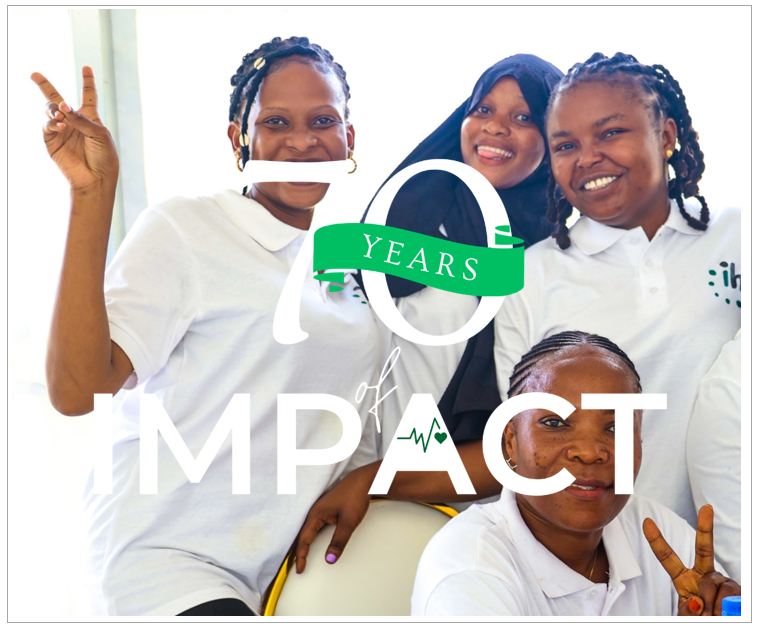
As Ifakara marks 70 years of advancing health research, the contribution of its 300 women is not a footnote in history. It is a central chapter — written in dedication, discovery, and determination.
Because when women make up nearly half of a scientific workforce, they are not simply participating in the future of research.
They are helping design it.