

#IFAKARAWOMEN@70: At Ifakara, the story of women is written not only in words—but in numbers that speak
On paper, they look like statistics. In reality, they are milestones of determination, leadership, and impact.
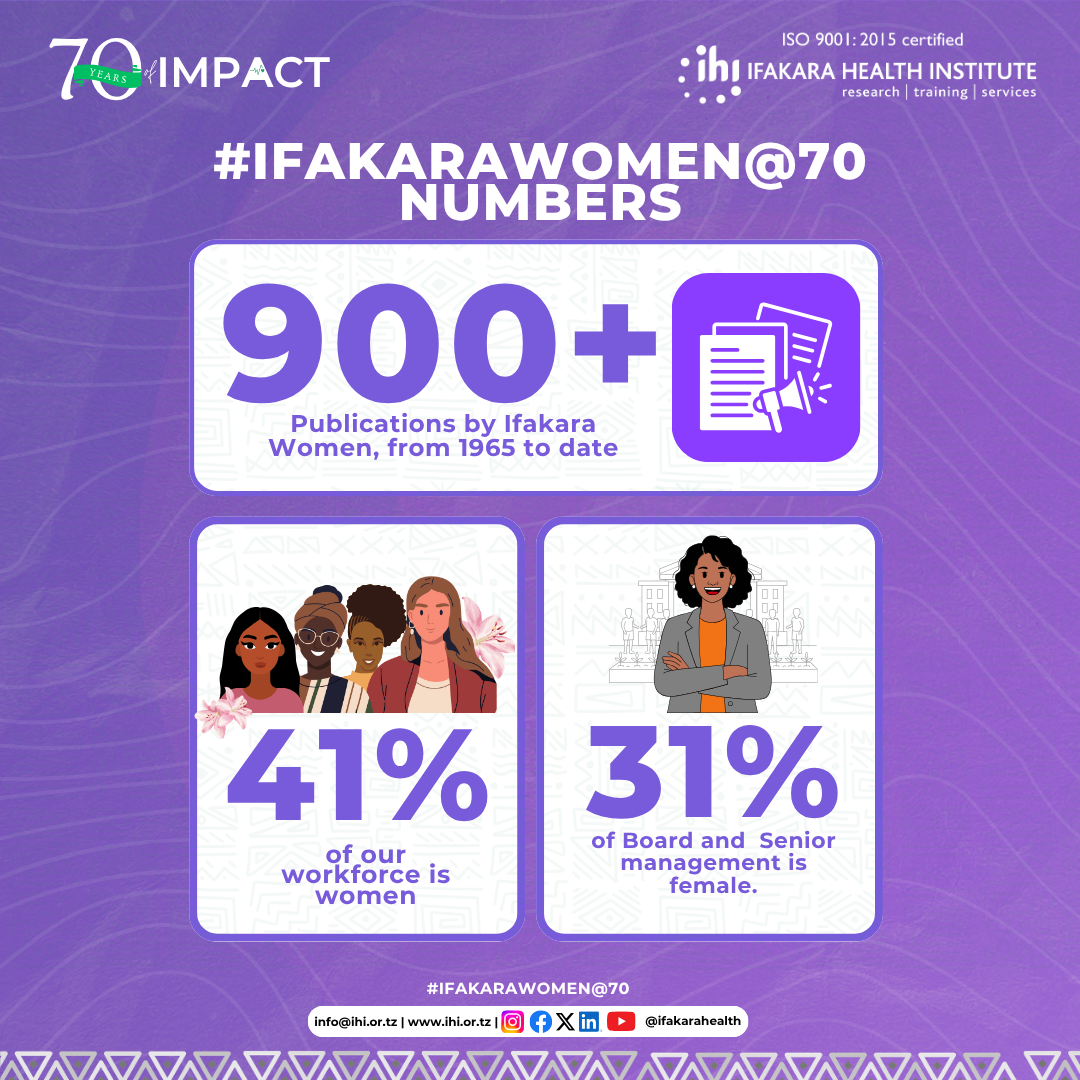
More than 900 scientific publications (1965 to date)
That figure represents decades of inquiry led and shaped by women scientists—late nights analysing data, long days in laboratories and field sites, and countless moments of persistence. Each publication is a contribution to global knowledge and a step closer to better health outcomes for communities in Tanzania and beyond.
41% of Ifakara’s active workforce is female (2026)
Nearly half of the Institute’s engine is powered by women. They are researchers, programme managers, administrators, finance experts, field officers, laboratory professionals, and support staff. Together, they ensure that science moves smoothly from concept to community—bridging ideas with action, and evidence with impact.
Ten women in senior governance (2026)
31 percent of leadership across the Board and Management Committee is female. These are women helping steer the Institute’s direction, shaping decisions that influence research priorities, partnerships, and policy engagement. Their presence at the decision-making table reflects a growing recognition that inclusive leadership strengthens institutions—and the science they produce.
But these numbers are not endpoints. They are entry points. Behind every percentage is a personal journey. Behind every publication is a story of curiosity and courage. Behind every leadership role is a woman who has earned her place—and opened doors for others to follow.
As Ifakara marks its 70th anniversary, these figures offer a powerful reminder: progress is measurable, but its true value lies in people. Women at Ifakara have not simply contributed to the Institute’s success—they have shaped its identity, sustained its mission, and expanded its impact over seven decades.
And this week, we invite you to look beyond the numbers; to meet the women behind the data; and to explore the journeys, breakthroughs, and commitments that continue to define Ifakara’s legacy—one story at a time.