

MALARIA: Poorest households bear the heaviest burden in Tanzania
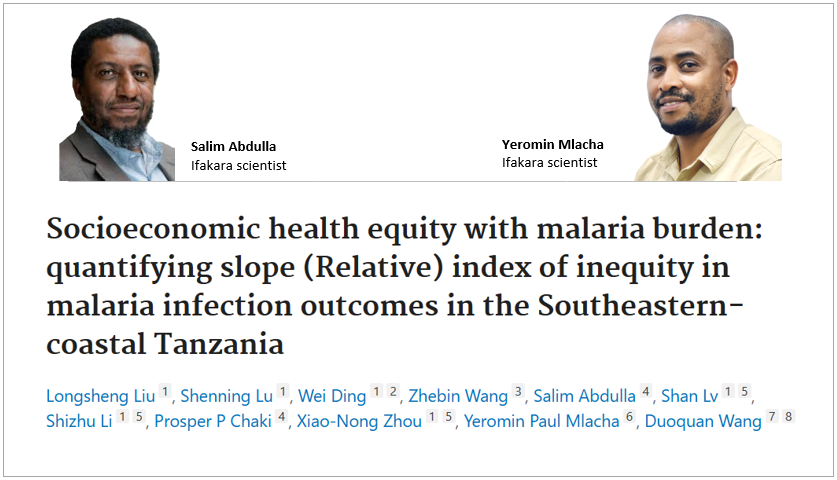
Fresh findings from a study in Tanzania show that malaria continues to affect poor communities in south-eastern part of the country harder than wealthier ones, exposing deep socioeconomic inequalities in infection risk, treatment costs and productivity loss.
Published in BMC Public Health, the study analyzed data from more than 11,000 people across the districts of Rufiji, Kibiti, and Kilwa. While malaria remains widespread, the researchers found that its burden is not evenly shared — underscoring the need for targeted public health interventions to address persistent inequities.
Why the study matters
This study matters because it exposes malaria as a driver of inequality, not just disease. By showing that poorer households in Tanzania face higher infection risk, greater treatment costs, and deeper productivity losses, it provides evidence for targeting resources where need is greatest. The findings strengthen the case for equity-focused malaria control that protects livelihoods, narrows health gaps, and accelerates progress toward elimination.
Ifakara, Chinese partners led the study
The study was led by Longsheng Liu, alongside Shenning Lu, Wei Ding, Zhebin Wang, Shan Lv, Shizhu Li, Xiao-Nong Zhou, and Duoquan Wang from the Chinese Center for Disease Control and Prevention. Contributing scientists from the Ifakara Health Institute included Dr. Salim Abdulla, Dr. Prosper Chaki, and Dr. Yeromin Mlacha.
The Tanzania–China research team collaborated under the China–Tanzania Demonstration Project on Malaria Control (2015–2021+), a public health initiative that adapted China’s 1-3-7 malaria surveillance strategy and the “Test, Treat, Track” (T3) approach. The project achieved an 81% reduction in malaria in pilot areas such as Rufiji by strengthening localized and rapid response systems to cut transmission.
Wealthier households face lower risk
The study used internationally recognized inequality measurements — the Slope Index of Inequality (SII) and the Relative Index of Inequality (RII) — to quantify the relationship between socioeconomic status and malaria burden.
Researchers found that people from higher socioeconomic backgrounds were less likely to test positive for malaria. They were also less likely to spend more money on treatment and lost fewer days of work or school due to illness.
The results show a clear pattern: as household socioeconomic status improves, the risk of malaria infection declines, treatment costs decrease, and productivity losses lessen.
Stark district-level differences
Striking differences were also observed across districts.
Rufiji demonstrated the most equitable outcomes, with narrower gaps between wealthier and poorer households in infection rates, treatment costs, and days lost to illness.
In contrast, Kilwa and Kibiti showed wider inequalities. In Kilwa particularly, poorer households experienced substantially higher infection rates and spent more on treatment compared to the wealthiest groups. Kibiti showed similar patterns of inequality.
Malaria as a social and economic issue
The study confirms that malaria is not only a medical issue but also a social and economic one. Poorer households bear a heavier burden — facing higher infection risks, greater out-of-pocket expenses, and more lost productivity.
The authors urge policymakers to integrate inequality monitoring into malaria control programmes and prioritize districts with high disparities through tailored, equity-focused interventions.
“By prioritizing equity-focused policies, such as enhanced access to prevention and treatment, Tanzania can make strides toward more inclusive malaria control and health system strengthening, particularly for the most vulnerable populations,” the researchers concluded.
Read the publication, here.