OUTREACH: Strengthening emergency preparedness in schools
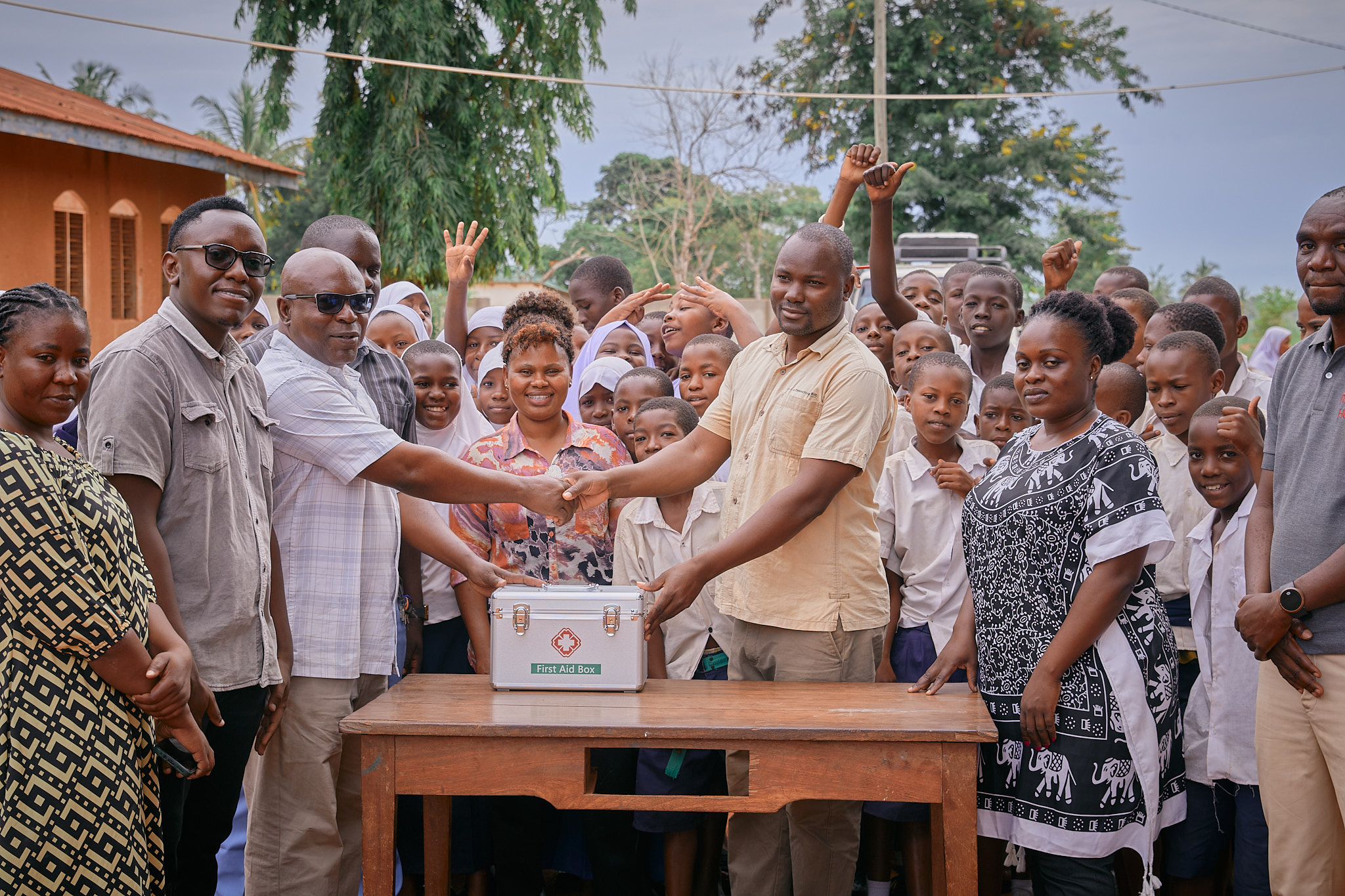
On Tuesday, February 24, 2026, scientists from the Ifakara Health Institute visited schools in Miono and Rupungwi villages, Coast Region, to donate First Aid Kits and provide hands-on lifesaving training to students and community members.
This initiative, part of the Institute’s ongoing community outreach program, demonstrates a commitment to ensuring that scientific impact reaches beyond the lab and directly benefits the communities that need it most. Schools visited include Makole, Kikaro, and Msufini.
Strengthening school preparedness
The initiative went beyond the handover of supplies. Scientists and health professionals provided hands-on demonstrations, guiding both teachers and students through the contents of the First Aid Kits, including bandages, antiseptics, gloves, and other essential emergency response materials.
Through interactive sessions, participants were taken step-by-step on how to respond to common school-related incidents such as minor injuries, fainting, nosebleeds, and burns. Teachers were also oriented on the proper storage and management of the kits to ensure they remain accessible and effective when needed.
The sessions encouraged active participation from students, transforming the exercise into a practical learning experience that emphasized preparedness, responsibility, and confidence in responding to emergencies.
Leadership commitment to community impact
The outreach team was led by Dr. Omar Juma, who emphasized that the initiative aligns with the Institute’s broader mission of ensuring that research translates into real-life impact. He highlighted that while Ifakara is internationally recognized for its contributions to malaria research, infectious disease control, and health systems strengthening, its responsibility also includes supporting communities directly through practical interventions.
He also underscored the importance of equipping schools with both tools and knowledge, noting that empowering teachers and students with basic first aid skills strengthen community resilience and contributes to safer learning environments. He further encouraged students to pursue science with curiosity and purpose, reminding them that scientific knowledge can be a powerful instrument for protecting and improving lives.
70 years of impact — Science in action
As Ifakara Health Institute marks 70 years of impact this year, initiatives such as this demonstrate how decades of research and innovation continue to benefit communities at the grassroots level. For seven decades, the Institute has generated evidence that informs health policies and interventions nationally and globally — particularly in malaria control, maternal and child health, and disease surveillance.