

MALARIA: Rapid response to new infections delivers major gains for poor households
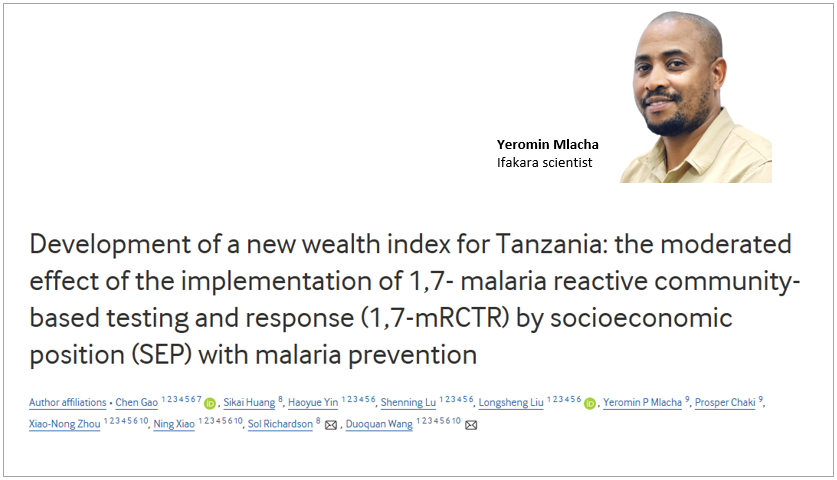
A malaria control strategy designed to respond quickly to new infections within communities has delivered the greatest benefits to poorer households in Tanzania, according to a study led by scientists from China and Tanzania.
The research, published recently in BMJ Global Health, evaluated a pilot programme known as the 1,7-malaria reactive community-based testing and response model (1,7-mRCTR). The approach aims to detect and respond to malaria cases quickly at the local level.
Implemented in Tanzania between 2015 and 2018, the model requires health facilities to report confirmed malaria cases within 24 hours. Response teams then visit affected communities within seven days to carry out testing and provide treatment to those who are infected.
The strategy shifts malaria control from passive treatment at clinics to active case detection within communities — an approach researcher say can help reduce inequalities in access to prevention and care.
Why the findings matter
By strengthening local reporting systems and delivering testing and treatment close to where people live, the strategy appears to have narrowed the gap between rich and poor in access to malaria protection.
The authors argue that malaria control efforts must consider social and economic realities if they are to both reduce transmission and address long-standing inequalities in access to care.
They conclude that community-focused responses, combined with strong reporting systems, could play an important role in sustaining malaria reductions while ensuring vulnerable populations are not left behind.
Tanzanian scientists at the forefront
The study was led by Chen Ge and colleagues from the Chinese Center for Tropical Diseases Research and Ifakara Health Institute. Key contributors from Ifakara included Dr. Yeromin Mlacha and Dr. Prosper Chaki, who were closely involved in advancing malaria surveillance and vector-control research.
The researchers analyzed data from nearly 20,000 households to assess whether the intervention reached communities equitably across socioeconomic groups. Their focus was not only on whether malaria declined, but also on who benefited most — a question often overlooked in disease-control programmes.
Poverty and malaria “closely connected”
The study found that before the intervention, poorer households were less likely to own or use mosquito nets, underlining the strong link between poverty and malaria risk.
After the 1,7-mRCTR model was introduced, malaria prevention improved across all socioeconomic groups. However, the most significant gains were seen among the poorest households, where mosquito-net ownership and use increased sharply.
Researchers say taking services directly to people’s homes — rather than relying solely on health facilities — helped overcome barriers such as travel costs, distance to clinics and delays in seeking treatment.
“The community-based, proactive model… successfully overcame many of the barriers that typically prevent impoverished populations from accessing health services,” the authors noted, adding that the approach can promote health equity while strengthening malaria surveillance.
Read the publication, here.