

PRESIDENTIAL MENTION: President Samia highlights Ifakara in call for sustainable malaria financing
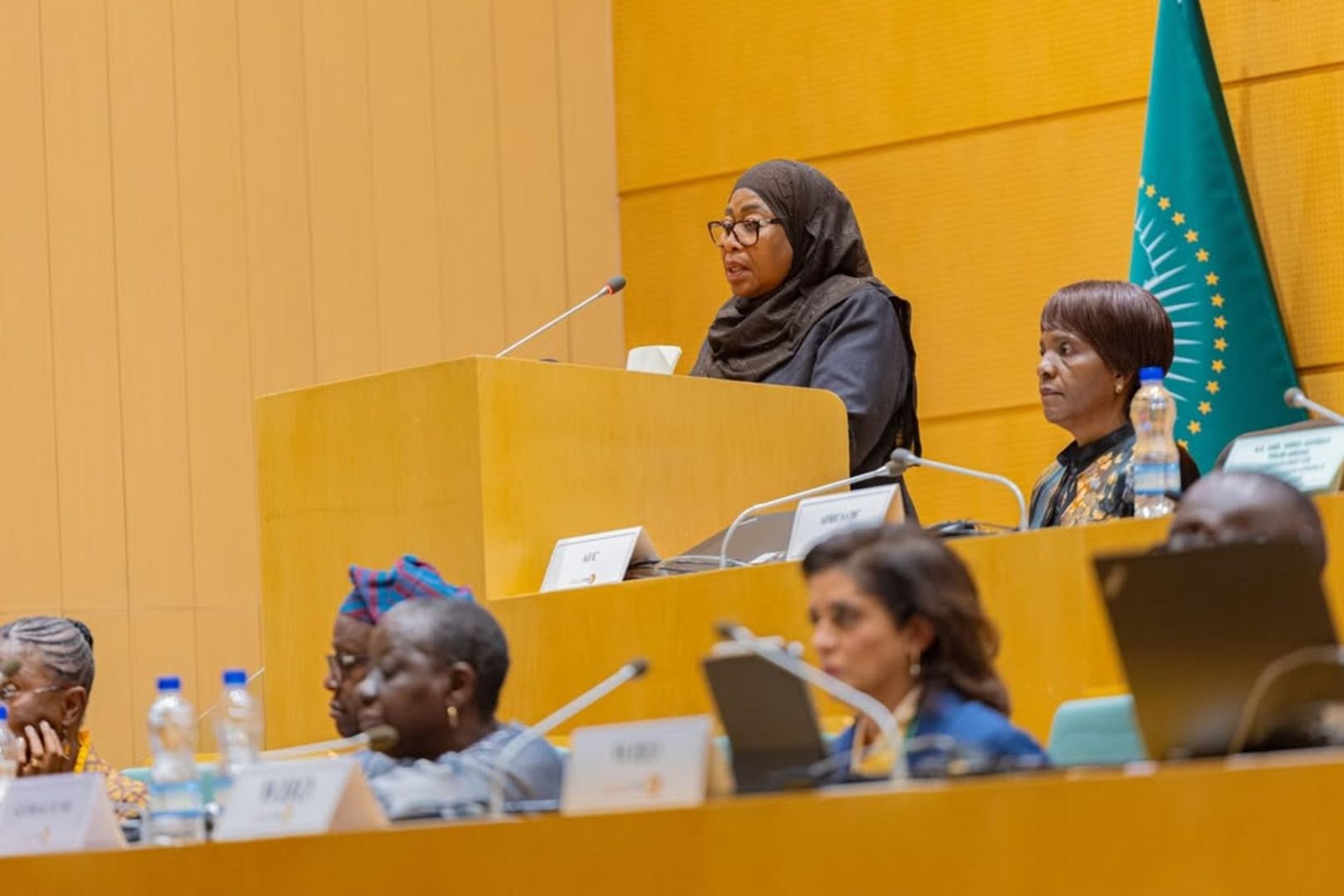
At a high-level media briefing on sustainable financing for malaria control held on the sidelines of the African Union Heads of State Summit in Addis Ababa, Ethiopia on 14 February 2026, H.E. Samia Suluhu Hassan, President of the United Republic of Tanzania, proudly highlighted the role of the Ifakara Health Institute, recognizing the Institute as a cornerstone of Tanzania’s investment in world-class research and innovation to defeat malaria.
She underscored that building strong institutions is essential to making leadership meaningful, noting that Tanzania has remained steadfast in strengthening systems that support the fight against malaria. She reflected on the country’s long history of confronting the disease and emphasized that Tanzania’s response spans the full spectrum — from scientific discovery to delivery of life-saving interventions.
Her remarks celebrated the work of Tanzanian scientists at Ifakara who are advancing cutting-edge solutions, including gene drive technologies, through the Transmission Zero project, aimed at preventing mosquitoes from transmitting malaria. She described this as African science led by African researchers to address African challenges — a powerful affirmation of local expertise and commitment.
The President also highlighted continued national efforts to scale up next-generation mosquito nets, expand malaria vaccines, strengthen community case management, and advance multi-sector collaboration across government ministries to ensure malaria-smart actions support broader goals of primary health care and universal health coverage.
Statement from T0 team
In appreciation of the President’s recognition, Drs. Dickson Lwetoijera and Brian Tarimo, representing the Transmission Zero team at IHI, stated:
“We sincerely thank Her Excellency, the President of the United Republic of Tanzania, Dr Samia Suluhu Hassan, for her remarks and recognition of the scientific efforts underway in our country to combat malaria through innovative technologies.
We appreciate the continued leadership and commitment of the Government of the United Republic of Tanzania to advancing science, research, and innovation for national development and public health security. The acknowledgment of our work on gene drive research for malaria control under the Transmission Zero program is both an honour and a strong encouragement to our scientists and partners.”
The Transmission Zero program represents a collaborative scientific effort exploring next-generation genetic technologies to complement existing malaria control interventions. Its work is conducted with the highest standards of scientific rigor, biosafety, regulatory oversight, and community engagement, fully aligned with national laws and international ethical frameworks.
The team further expressed appreciation for the support of national and international partners, including National Institute for Medical Research (NIMR), Swiss Tropical and Public Health Institute, Imperial College London, regulatory authorities, community stakeholders, and funding partners, noting that “ their expertise, trust, and collaboration have made this work possible.
A shared sense of pride and responsibility
Being acknowledged by the President at a continental platform reflects the dedication of our scientists, staff, and partners who work tirelessly to generate evidence and innovations that protect communities.
We remain committed to telling the story of Tanzanian science, supporting dialogue on sustainable financing, and ensuring that research continues to inform policies and programs that bring the country closer to a malaria-free future.