

RABIES: Free vaccines can prevent hundreds of deaths in Tanzania
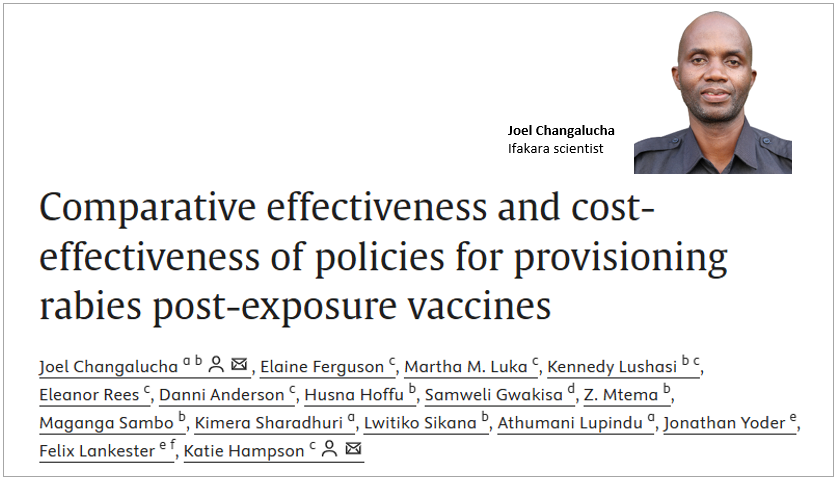
Providing rabies vaccines free of charge could prevent hundreds of deaths each year in Tanzania, according to a new study led by scientists from Tanzania, the United Kingdom, and the United States.
Rabies is almost always fatal once symptoms appear, but the disease can be prevented if people receive post-exposure treatment quickly after being bitten by an infected animal. The study estimates that about 800 people die from rabies annually in Tanzania, largely because many cannot access or afford the vaccine in time.
The study, recently published in the journal Vaccine, was co-led by Joel Changalucha of the Ifakara Health Institute and Katie Hampson of the University of Glasgow (UK). The research team included experts from the University of Glasgow, Tanzania’s Ministry of Health, and Washington State University (USA). Contributors from Ifakara Health Institute also included Kennedy Lushasi, Hoffu, Maganga Sambo, and Lwitiko Sikana.
Why many bite victims miss treatment
The researchers found that vaccine shortages, long distances to health facilities, and out-of-pocket costs continue to limit access to rabies post-exposure prophylaxis (PEP).
Testing different vaccination strategies
The study compared three policy scenarios over a five-year period:
- The current system, where access to rabies vaccines is limited and inconsistent
- A policy of free rabies vaccination for bite victims
- Free vaccines combined with Integrated Bite Case Management (IBCM), a system that strengthens surveillance, risk assessment, and coordination between health services, communities, and veterinary authorities.
Free vaccines save lives at low cost
The findings show that making rabies vaccines free would significantly increase uptake and reduce rabies deaths by more than 40%. While this would require an increase in vaccine supply, the researchers note that the health benefits far outweigh the additional costs.
The greatest impact was observed when free PEP was combined with IBCM. This approach further reduced rabies deaths while ensuring vaccines were targeted to those at highest risk. The study found this strategy to be highly cost-effective, at an estimated US$181 per death prevented.
Why these findings matter
Rabies remains one of the world’s deadliest infectious diseases, with most deaths occurring in low-income countries. Children and people living in rural areas are particularly at risk.
In Tanzania, current PEP practices fall short of meeting demand, creating access gaps that continue to drive preventable rabies deaths. The study shows that addressing these gaps — especially by expanding PEP access and integrating IBCM — could have a major public health impact.
What the researchers recommend
The researchers highlight the urgent need for dedicated national policies to strengthen access to rabies PEP and to leverage global initiatives, such as Gavi, to support sustainable investment.
Given the strong cost-effectiveness demonstrated across all scenarios, the scientists recommend prioritizing nationwide implementation of improved PEP access combined with IBCM integration.
“We estimate the burden of rabies in Tanzania and the resources required to meet the growing demand for preventive biologicals between now and the global target of eliminating dog-mediated rabies by 2030,” said Joel Changalucha, the study’s lead author.
These findings are relevant beyond Tanzania, offering important evidence for other rabies-affected countries considering how best to expand access to lifesaving vaccines.
Read the publication, here.