

DURABILITY: Are malaria mosquito nets as long-lasting as we think?
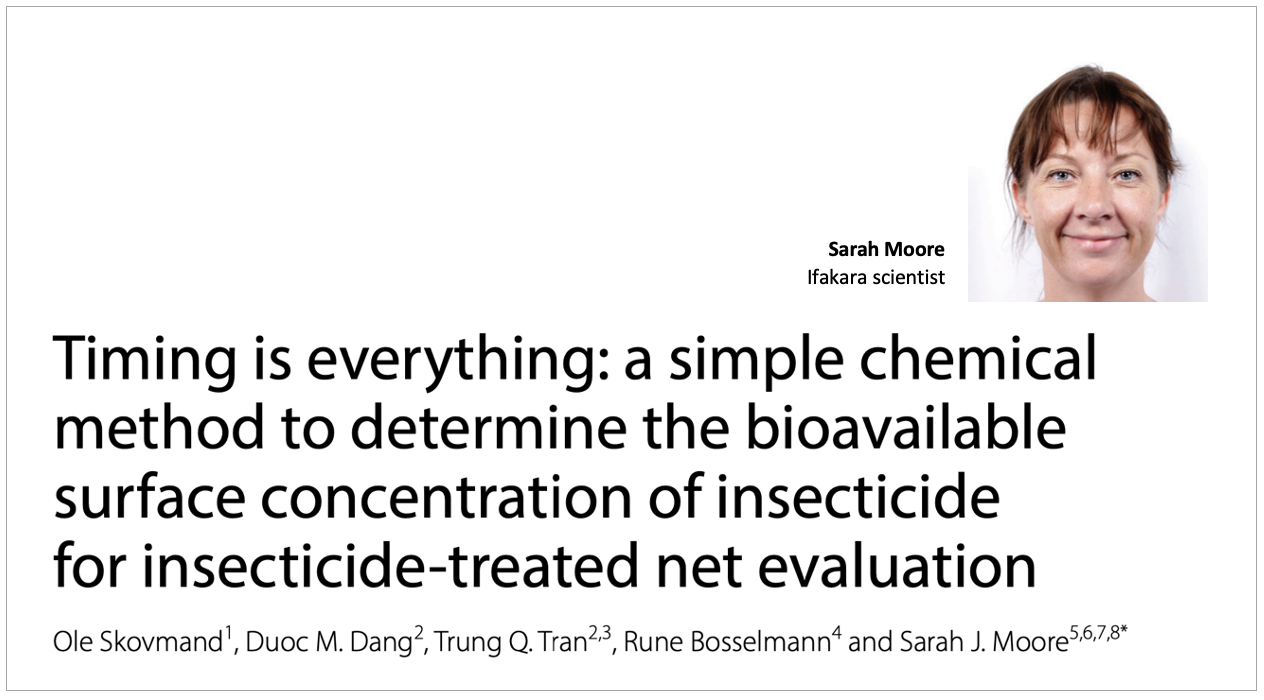
A new study by the Ifakara Health Institute in Tanzania, working with international partners, is questioning whether insecticide-treated nets (ITNs)—one of the most powerful tools in the fight against malaria—remain effective for as long as expected.
Researchers from Tanzania, Switzerland, Vietnam and Denmark examined whether the World Health Organization (WHO)’s standard testing accurately reflects how quickly insecticide returns to the net after washing.
Why it matters
Treated nets must stay effective after 20 washes to receive WHO prequalification. The time between washes is based on the regeneration time (RT) method, which estimates how long it takes insecticide to return to the net surface. This is measured using mosquito tests with a set wash interval (WI). Mosquito deaths are observed until they plateau, assumed to reflect full active ingredient (AI) availability.
However, mosquitoes can die before all AI reaches the surface, meaning results often depend on the mosquito strain rather than the net itself. If the WI is too short, nets may appear more durable than they really are—or fail testing even if they would protect people in real life.
What the study found
The findings — published in the Springer Nature Link recently — suggest that insecticide returns to the net surface more slowly than the WHO standard test indicates.
What they found:
• Some mosquitoes (susceptible) feel full protection in 1 day, but resistant mosquitoes may take up to 5 days 💨
• Mosquito-killing chemicals return to the net more slowly than the WHO tests suggest ⏳
The study concluded that WHO’s current method depends largely on mosquito strain rather than the net itself.
Researchers recommend combining tests to improve predictions of treated net effectiveness, ensuring millions of them continue protecting communities from malaria after repeated washes.
Behind the research
Prof. Sarah Moore—a researcher at the Ifakara Health Institute, Tanzania, and the Swiss Tropical & Public Health Institute, University of Basel—was the last author. The study was led by Ole Skovmand, Consulting Vector Control, Castelnau Le Lez, with contributions from Duoc M. Dang (Biolytrics Laboratories, Hanoi, Vietnam), Trung Q. Tran (Faculty of Pharmacy, East Asia University of Technology, Hanoi, Vietnam), and Rune Bosselmann (Vegro Aps, Copenhagen, Denmark).
>> Read the full article here.