

RABIES: High dog ownership heightens disease risk in northern Tanzania
Nearly half of households in Tanzania’s Mara Region keep dogs, with ownership patterns closely linked to rural living, household size, and local environments, a finding that has major implications for rabies control efforts.
A new study published in Preventive Veterinary Medicine recently shows that dog ownership is far more common in rural and agricultural settings than in urban areas, underscoring the need for locally tailored vaccination strategies to effectively prevent the spread of rabies.
The study found that about 47% of households in the Mara Region owned at least one dog. Most dog-owning households kept between one and three dogs, with an average of just over two dogs per household.
Why these insights matter
Rabies remains a serious public health concern in Tanzania and across sub-Saharan Africa, where domestic dogs are the main source of infection in humans. Understanding where dogs are most common, and the social and environmental factors that shape ownership, is essential for designing effective prevention and elimination programs.
Rural households more likely to own dogs
Dog ownership varied by location. Rural households were much more likely to own dogs than those in urban and peri-urban areas. In towns, fewer households owned dogs, and the number of people per dog was generally higher than in rural communities.
Environment shapes ownership patterns
Beyond social factors, the study showed that land use and environmental conditions matter. Households located in areas dominated by farmland, shrubs, or tree cover were more likely to own dogs than those in built-up environments.
Once a household owned dogs, however, these factors had little influence on the number of dogs kept, suggesting consistent ownership practices across different settings.
Implications for rabies control
The researchers also documented differences in human-to-dog ratios, with rural areas generally having more dogs per person than urban areas. This information is vital for planning mass dog vaccination campaigns, helping authorities better estimate vaccine needs and prioritize high-risk areas.
Informing smarter, targeted interventions
By providing detailed, local data on dog ownership, the study offers a strong evidence base for improving rabies control strategies. The findings show that one-size-fits-all approaches may miss key communities, and that vaccination and surveillance efforts should be adapted to local social and environmental realities.
Ifakara, international scientists lead the study
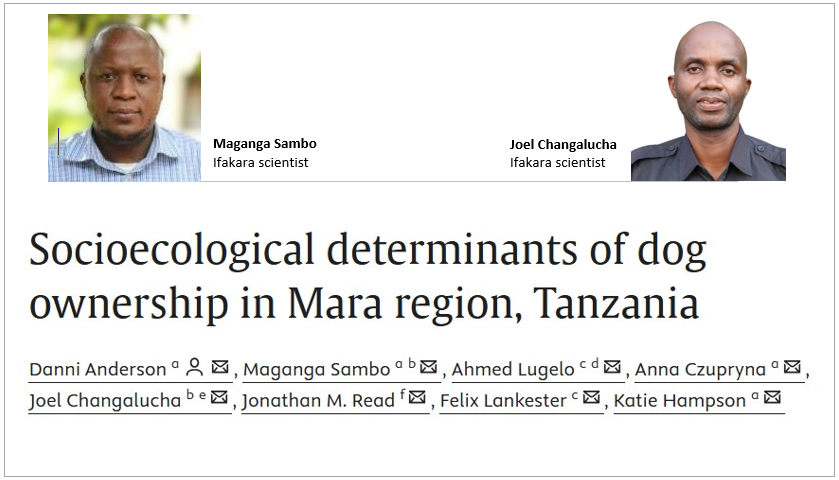
The study was led by an international team of scientists from the UK, Tanzania, and the United States. Researchers from the Ifakara Health Institute, Maganga Sambo and Joel Changalucha, contributed equally to the work, alongside colleagues Danni Anderson, Anna Czupryna, and Katie Hampson from the University of Glasgow; Ahmed Lugelo and Felix Lankester from Washington State University; and Jonathan Read from Lancaster University.
Read more, here.