

MENTAL HEALTH: Peer support is transforming care globally
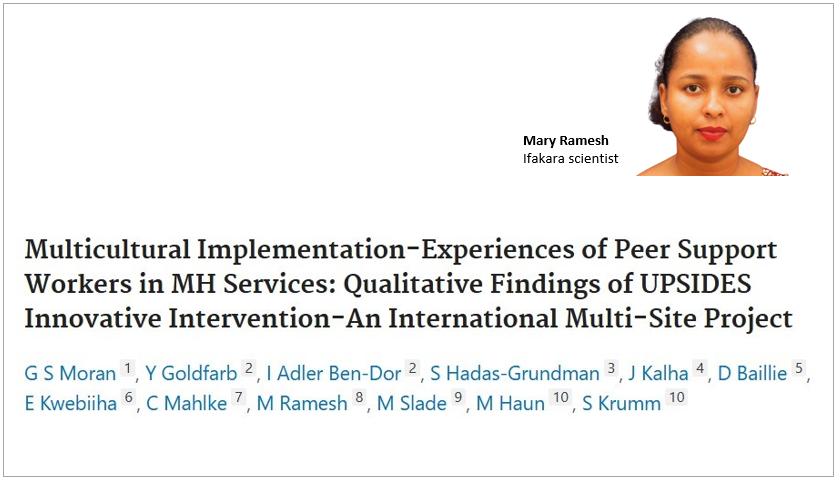
Mental health peer support workers (PSWs) are helping to transform care for people with mental health conditions, a new multi-country study suggests. The research, part of the UPSIDES (Using Peer Support in Developing Empowering Mental Health Services) project, explored the experiences of PSWs in six countries, including Germany, Uganda, Tanzania, Israel, and India.
Study led by an international team
A large, international team of researchers and peer support experts contributed to the study, which was published in the Journal of Occupational Rehabilitation. Among them, Mary Ramesh from Tanzania’s Ifakara Health Institute played a key role.
The study was co-led by G. S. Moran and Y. Goldfarb from Ben Gurion University of the Negev (Israel). Other institutions involved included East London NHS Foundation Trust (UK), Centre for Mental Health Law and Policy (India), Butabika National Referral Hospital (Uganda), University Medical Center Hamburg-Eppendorf (German), University of Nottingham (UK), and Ulm University (Germany).
Why it matters
Mental health conditions are a leading cause of psychosocial disabilities worldwide, yet access to care remains limited, especially in low- and middle-income countries.
Peer support in mental health (MH) offers a cost-effective, community-driven approach that can complement formal mental health services. By empowering individuals with lived experience to support others, peer support improves recovery outcomes, reduces stigma, strengthens communities, and helps address gaps in overstretched health systems.
Benefits for recovery, community engagement
The study found that peer support can aid personal recovery, improve employability, and reduce stigma in communities. In low- and middle-income countries, PSWs reported benefits such as better illness management, improved access to care, and stronger financial stability.
They also actively engaged with families, local authorities, and community groups to promote mental health awareness and education.
Challenges in high-income countries
In high-income countries, PSWs’ experiences were more focused on professional development and navigating self-disclosure in the workplace. Across all settings, PSWs highlighted common challenges, including unclear roles, difficulties integrating with mental health staff, and limited recognition within formal healthcare systems.
Call for better integration and support
The study’s authors underline that while peer support has the potential to enhance recovery and foster systemic change, experiences vary widely across cultural and institutional contexts. The researchers emphasized the need for clearer role definitions and stronger integration of peer support workers into mental health services globally.
“The findings reveal the potential of mental health peer support workers to aid in recovery and drive systemic change,” the researchers noted. “However, implementation experiences differ across cultures, highlighting the need to further develop the PSW role and integrate it into mental health systems at different sites.”
They added that with proper support, peer support workers could become a key element of mental health systems, helping to close gaps in care and reduce stigma for millions of people worldwide.
Read the publication, here.