

INTEGRATED CARE: Mental health support transforms lives of young people with HIV
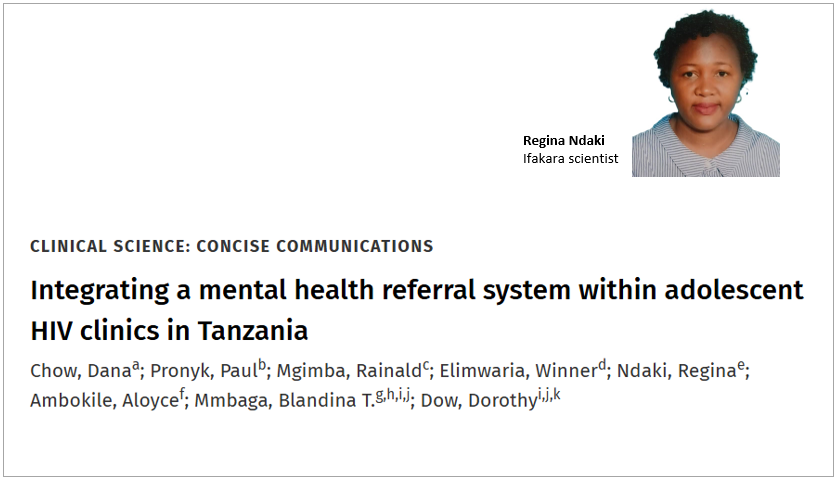
For many young people living with HIV in Tanzania, hope is coming not from a new drug, but from a change in care. A new study shows that adding mental health support to routine HIV treatment encourages more youth to seek help, and many felt better after just one visit.
A peer-led program driving change
The study, published in the AIDS journal, was conducted under Sauti ya Vijana (Voice of Youth), a peer-led, group-based intervention that builds life skills and supports the mental well-being of young people living with HIV.
The trial ran from March 2023 to March 2024 and brought together scientists from Singapore, Tanzania, and the United States. Ifakara Health Institute scientist Regina Ndaki contributed by supporting data collection and managing the referral system.
Why integrated care matters
For many young people living with HIV, mental health challenges often go hand in hand with their physical health needs. When mental health support is built directly into HIV services, young people get help earlier, before problems become severe.
Integrated care also reduces the burden on clinics by offering support in one place, a practical solution that strengthens both emotional well-being and HIV treatment outcomes.
349 youth screened across four regions
A total of 349 young people living with HIV from Kilimanjaro, Mwanza, Mbeya, and Morogoro took part. During their routine clinic visits, they were screened for depression, anxiety, and self-harm. Those showing signs of distress were automatically referred for mental health care.
Quick support, strong results
Of the 349 participants, 62 — nearly one in five — needed mental health support. A strong majority, 81%, attended their referral appointments, and more than half felt better after only one counseling session. Only eight required specialized care mental health care.
Stepped-care system shows potential
These results underscore the value of a "stepped-care" system, where basic support is offered first and specialist care is reserved only when necessary. This is especially important in Tanzania, where mental health professionals are few and health facilities are often overstretched.
Closing a long-overlooked gap
Researchers say the findings reveal a major gap in HIV services. While antiretroviral treatment has improved physical health for many young people, their emotional and mental health needs often remain undetected and untreated.
“This study shows that mental health support can be successfully embedded within existing HIV services,” the researchers concluded, calling the model “acceptable and feasible” in Tanzania’s public health system.
A path toward better care
With rising awareness of adolescent mental health in sub-Saharan Africa, the findings show that simple screening tools and peer-led support can help prevent severe mental illness, improve treatment adherence, and save lives.
For many young people, the emotional burden of HIV — fear, stigma, isolation, and uncertainty — can be overwhelming. Integrating mental health care into HIV treatment is no longer optional. It is practical, possible, and essential for comprehensive care.
Read the publication, here.