

HEALTH SYSTEMS: Tanzania advances use of evidence in healthcare planning, but gaps remain
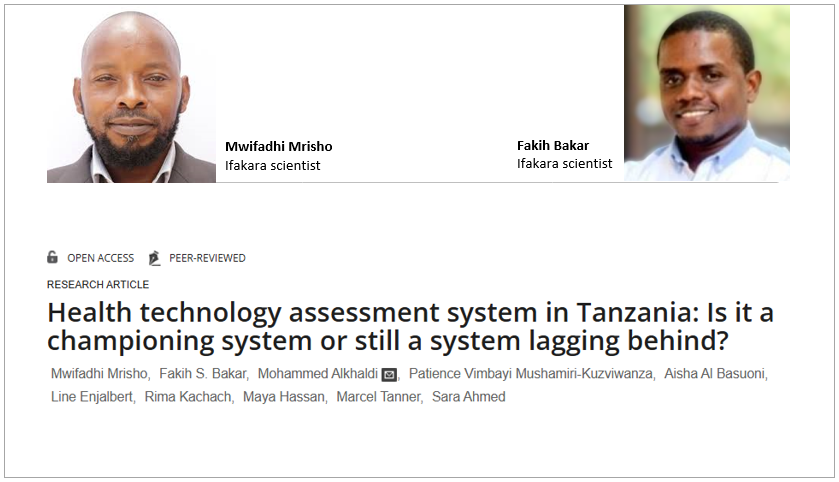
Tanzania is making steady progress in using evidence to guide healthcare spending and policy decisions, but major gaps continue to affect the system’s effectiveness, a new study shows.
Published recently in PLOS Global Public Health, the study examined the country’s use of Health Technology Assessment (HTA) — a process used to evaluate the safety, effectiveness, value and impact of health technologies and interventions, including medicines, diagnostics, medical devices and public health programmes.
Researchers say HTA is increasingly recognized as an important approach for countries working to strengthen healthcare systems while managing limited resources.
“This mechanism is used to generate and disseminate evidence to inform and support policymaking, making it a bridge between research and decision-making,” the authors noted.
The study was co-led by Mwifadhi Mrisho and Fakih Bakar from Ifakara Health Institute alongside Mohammed Alkhaldi from McGill University and international partners.
Why the study matters
The study highlights the growing importance of HTA in helping countries make smarter and more transparent healthcare investment decisions.
Although HTA is not a new concept, researchers argue that strengthening HTA systems could help Tanzania use health resources more efficiently, avoid wasteful spending, improve access to effective services, and support progress toward Universal Health Coverage (UHC).
Study highlights progress in HTA implementation
The researchers evaluated the implementation of HTA in Tanzania between 2021 and 2023 through expert interviews and surveys involving organizations connected to healthcare policy and decision-making.
Among the milestones highlighted was the establishment of a national HTA committee in 2017. The study found that HTA has contributed to decisions on clinical guidelines, medicine pricing and discussions around health benefit packages and universal health coverage.
There was also a growing recognition among policymakers and health institutions of the importance of using scientific and economic evidence to guide healthcare investments.
Weak systems and limited funding remain barriers
Despite the progress, researchers identified several challenges affecting the sustainability and effectiveness of Tanzania’s HTA system.
Key barriers highlighted in the study include limited understanding of HTA processes among stakeholders, fragmented implementation, weak institutional structures, and insufficient financial and political support.
Study calls for stronger institutional support
To strengthen the system, the study recommends integrating HTA into national health legislation, securing sustainable government financing, and promoting broader stakeholder participation.
According to the researcher, implementing these recommendations will require sustained commitment, coordinated collaboration, and long-term investment to strengthen HTA systems in Tanzania and similar low- and middle-income settings.
Read the publication here.