

Principal Investigator: Dr. Kennedy Lushasi
Project leader/ Coordinator: Dr. Kennedy Lushasi
Project Administrator: TBC
Funding Partner: Wellcome Trust
Start date: Sept. 30, 2026
End date: Sept. 30, 2026
Using an Integrated One Health Approach to Eliminate Rabies
The Integrated One Health Approach to Eliminate Rabies is a research initiative led by Ifakara Health Institute research scientist Dr. Kennedy Lushasi that seeks to better understand how rabies persists and resurges in southeast Tanzania and how control efforts can be strengthened to support its elimination.
Rabies is a preventable disease, with domestic dogs recognized as the main reservoir. However, evidence from southeast Tanzania suggests that rabies transmission may involve a more complex interaction between dogs, wildlife and human populations. In the region, jackals account for more than 30% of reported rabies cases, highlighting the need to understand how transmission moves between different animal hosts.
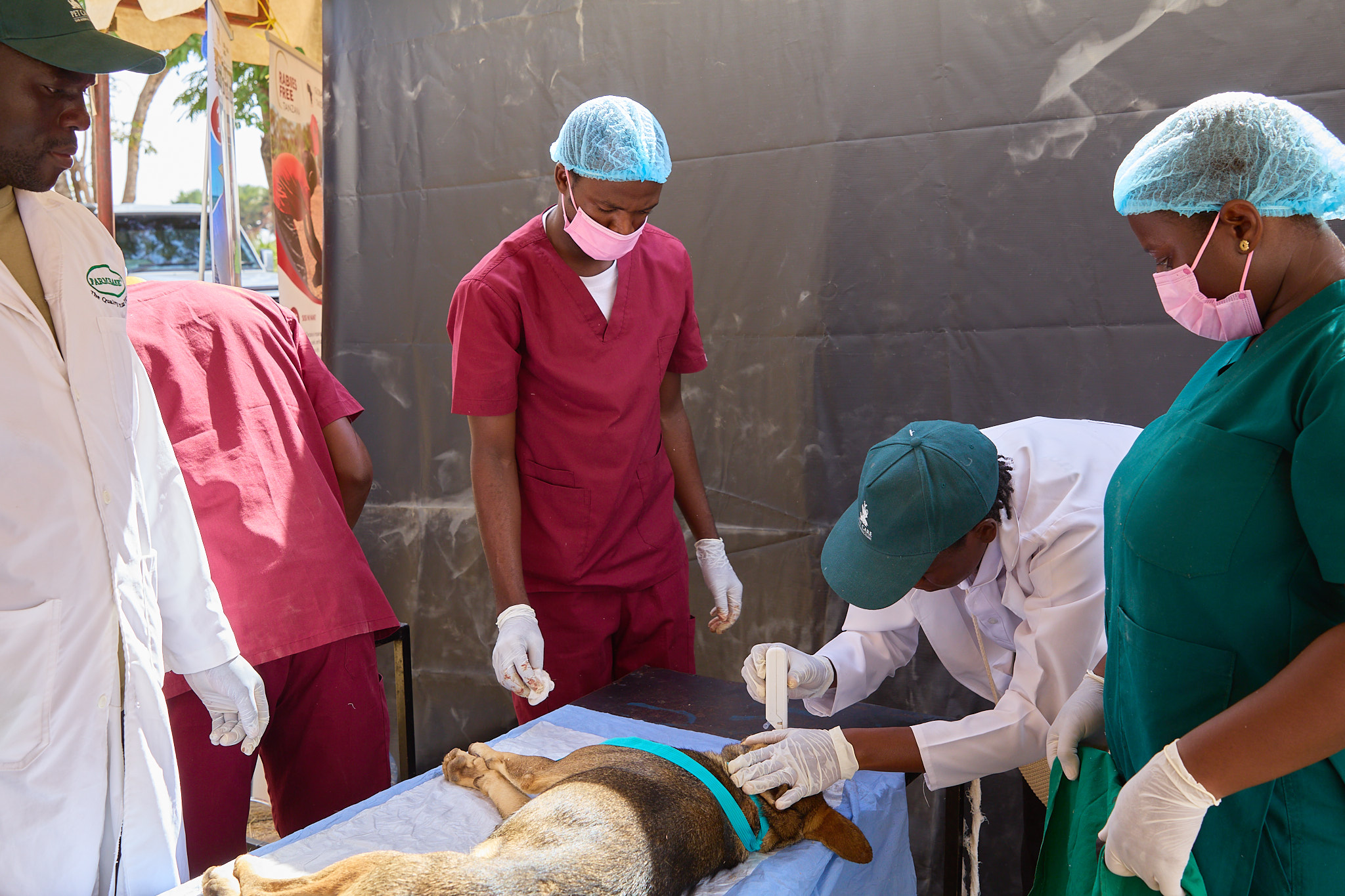
The project builds on surveillance and vaccination work conducted in Lindi and Mtwara, covering an area of about 83,710 square kilometers, with approximately 2.9 million people and 40,000 dogs. Evidence collected over the years shows that human, dog and wildlife rabies cases declined during periods of sustained mass dog vaccination, but cases increased again when vaccination stopped.
Understanding why rabies returns
The project will investigate several possible explanations for rabies resurgence, including the virus remaining at low levels in dogs or wildlife, being reintroduced from neighbouring areas, or being maintained within wildlife populations. Differences in vaccination coverage and exposure-related behaviours may also leave pockets of animals vulnerable to infection.
By improving understanding of these transmission patterns, the project aims to generate evidence on how rabies is maintained, the geographical scale at which control efforts need to operate, and how to distinguish ongoing transmission from reintroduction of the virus.
Supporting rabies elimination
The findings are expected to help inform more targeted rabies vaccination strategies, reduce human exposure to rabies and prevent deaths. The project also aims to strengthen One Health surveillance and research capacity in Tanzania, with an approach that could provide lessons for understanding other diseases that circulate between humans and animals.
Overall, the project asks a key question for rabies elimination: when dog vaccination reduces cases, what allows the disease to return—and how can control efforts be designed to prevent that resurgence?