

MILESTONE: New malaria vaccine candidate shows promise in Tanzania trial
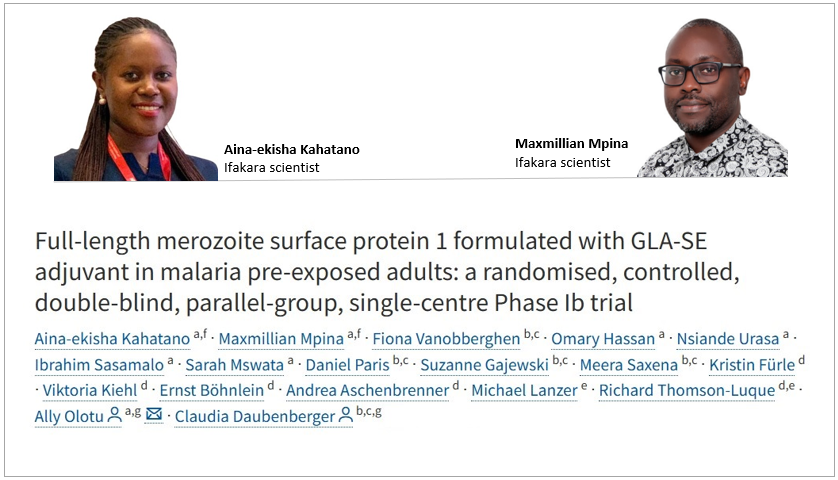
A new malaria vaccine candidate, named SUM-101, has shown encouraging results in its first trial among adults in Tanzania who were already exposed to malaria. The study found that the vaccine was safe, well-tolerated, and able to trigger a strong immune response — a significant milestone in the ongoing global fight against malaria.
The findings suggest that SUM-101 could play an important role in shaping the next generation of malaria vaccines, complementing existing ones like RTS,S and R21 – already endorsed by the World Health Organization (WHO) a couple of years ago – which offer partial protection.
Why this trial matters
Despite major advances in malaria prevention and control, the disease continues to take a heavy toll — particularly in sub-Saharan Africa, where it remains one of the leading causes of illness and death.
Tanzania alone records millions of cases every year. A more effective vaccine that targets a different stage of the malaria parasite could greatly enhance protection.
Researchers in this study, which was led by Aina-ekisha Kahatano and Maxmillian Mpina, the joint first authors from the Ifakara Health Institute, are optimistic that these findings show real potential for improving malaria vaccines — especially in regions where exposure is high.
The study adds to growing evidence that combining blood-stage and pre-erythrocytic vaccines could lead to broader, longer-lasting protection.
What the study actually found
Conducted in Bagamoyo, Tanzania, the clinical trial involved 40 healthy adults aged between 18 and 45 years — all living in areas where malaria transmission is common. Participants were randomly divided into two groups: one received the SUM-101 malaria vaccine, while the other received a standard rabies vaccine for comparison.
Key findings include:
- No serious side effects: Most post-vaccine reactions were mild, such as short-lived pain at the injection site, headache, or fatigue.
- Strong immune response: SUM-101 generated high levels of antibodies (IgG and IgM), peaking around day 84 and remaining elevated for months.
- Cross-strain protection: The antibodies produced were able to recognize and attack different malaria parasite strains.
- Enhanced natural immunity: People who already had some malaria immunity responded even better after vaccination.
Researchers in this trial, which Dr. Ally Olotu from Ifakara Health Institute supervised together with Dr. Claudia Daubenberger from the Swiss Tropical and Public Health Institute, explain that the SUM-101 vaccine not only proved safe — it boosted the body’s natural defences against malaria.
A truly global collaboration
This pioneering Phase Ib clinical trial — published in eClinicalMedicine, part of The Lancet Discovery Science in October — highlights the power of international scientific partnerships. It was led jointly by researchers from: Ifakara Health Institute (Tanzania); Swiss Tropical and Public Health Institute (Switzerland); University of Basel (Switzerland); Sumaya Biotech GmbH & Co. KG (Germany); and Heidelberg University Hospital (Germany).
The research received partial funding from Sumaya Biotech GmbH & Co. KG through support from the EU Malaria Fund Berlin.
Looking ahead
The study team believes these promising results pave the way for larger clinical trials to further test SUM-101’s effectiveness in broader populations — including children, who are most vulnerable to malaria. They express optimism it could become part of a new generation of malaria vaccines — safer, stronger, and capable of saving millions of lives.
As Ifakara Health Institute continues to lead such groundbreaking work, this research underscores Tanzania’s growing contribution to global health innovation — and to the dream of a malaria-free world.
Read the publication, here.