

NEWBORNS BETTER CARE: NEST360 study shows how to make it happen
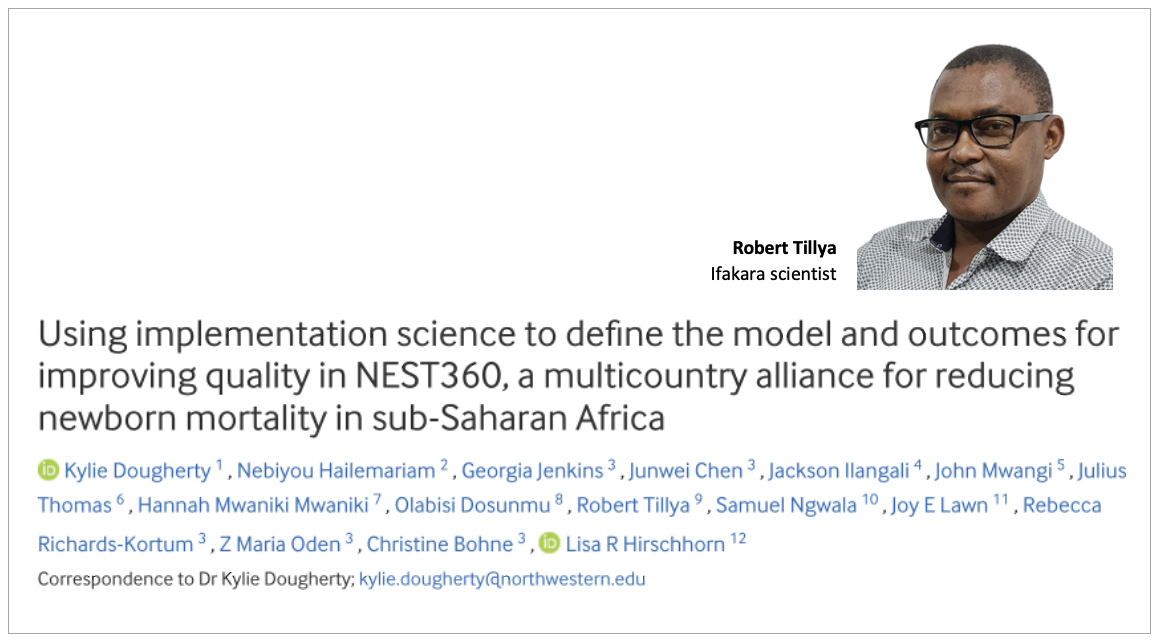
A new international study — with contributions from Robert Tillya, a scientist at the Ifakara Health Institute in Tanzania — has shown that using implementation science alongside quality improvement can dramatically enhance the care of small and sick newborns in resource-limited settings.
Published in BMJ Quality & Safety in May 2025, the research – part of the NEST360 program, – found that by identifying barriers, harnessing existing strengths, and applying structured strategies, health facilities could improve the reach, adoption, and feasibility of life-saving newborn care interventions.
Why it matters
Every year, thousands of newborns in sub-Saharan Africa die from preventable causes. In many cases, the problem isn’t just a lack of equipment or medicine — it’s about how care is delivered, monitored, and improved over time.
The study shows that a structured approach to improving quality in newborn care can:
- Ensure wider reach – all participating units logged into NEST360’s implementation tracker at least once.
- Boost adoption – every unit conducted a quality improvement project.
- Prove feasibility – almost all units integrated the new tools into their routine care documentation.
By integrating research and practical improvement methods, the model gives healthcare teams a clearer roadmap to save more newborn lives.
How the study was done
The researchers applied the Implementation Research Logic Model (IRLM) to map out what helps — and what hinders — improvements in newborn care. They documented:
- 33 contextual factors (with almost equal numbers of barriers and facilitators).
- 10 strategies that addressed these factors, from training and mentorship to data tracking and feedback.
- Early results showing strong uptake of the new systems in participating facilities across multiple countries.
A truly global effort
While Ifakara Health Institute’s Robert Tillya contributed to it, the study was led by Kylie Dougherty who as the lead author and senior author Lisa R Hirschhorn – both from Northwestern University, USA.
This study brought together experts from institutions across Africa, the USA, and the UK, including: Northwestern University (USA); Rice360 Institute for Global Health Technologies (USA, Ethiopia, Tanzania, Kenya); Aga Khan University (Kenya); APIN Public Health Initiatives (Nigeria); Kamuzu University of Health Sciences (Malawi); and London School of Hygiene & Tropical Medicine (UK).
Sustainable strategies underlined
The authors highlight the importance of sustainability strategies, ensuring that improvements in newborn care are maintained and scaled over time. They argue that structured, data-driven improvement methods — adapted to local realities — are not just possible in low-resource settings, but essential. They believe by working together and applying proven strategies, it’s possible to ensure every newborn gets the best possible start in life.
>> Read the full research paper here: BMJ Quality & Safety – NEST360 Study