
IHI@70: Women scientists call for stronger leadership, mentorship and institutional change
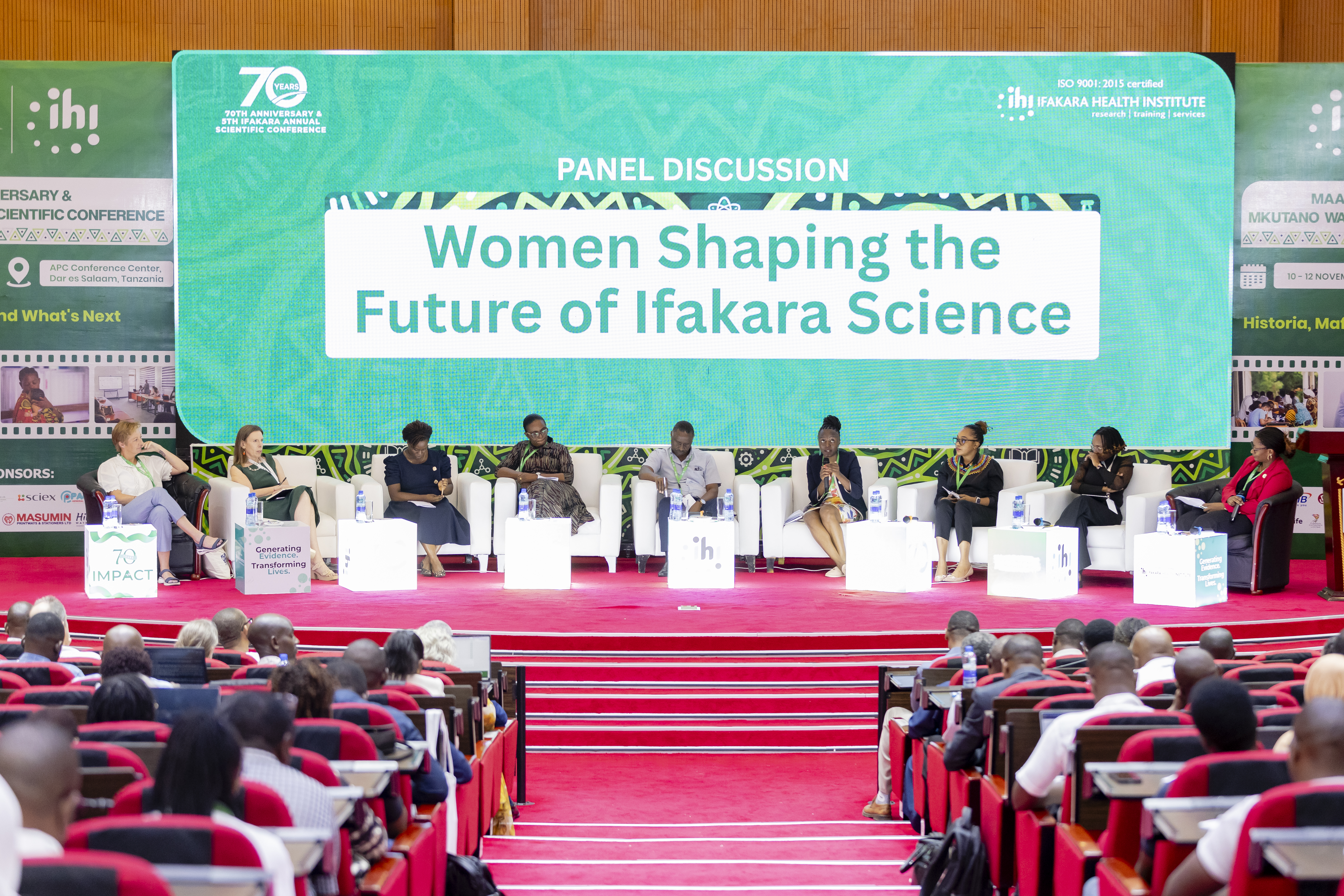
Women scientists and institutional leaders called for stronger mentorship, greater representation in scientific leadership and practical reforms to advance women's careers during a Women in Science panel discussion held on November 11, 2026, at the IHI@70 Celebrations & 5th Ifakara Annual Scientific Conference in Dar es Salaam, Tanzania.
The panel, moderated by Ifakara scientist Dr. Irene Moshi, featured Prof. Sarah Moore of Ifakara Health Institute; Prof. Heather Ferguson of the University of Glasgow; and Ifakara colleagues Dr. Grace Mhalu, Dr. Grace Mwangoka, Dr. Kafuruki Shubis, Dr. Anneth Tumbo, Farida Katunzi and Victoria Githu.
In 2026, women account for 41% of IHI's active workforce and hold 31% of leadership positions, reflecting important progress while highlighting opportunities for further advancement.
From participation to scientific leadership
Dr. Grace Mwangoka, the Head of Biomedical Research and Clinical Trials at Ifakara, recognized women's contributions across scientific, technical and administrative roles, calling for structured mentorship, greater access to research funding and stronger pathways into senior leadership.
Dr. Grace Mhalu emphasized that women must not only participate in research but also shape its priorities, lead clinical trials and influence health policies. “Women should not only be participants in research. They should be partners who form the research agenda.”
Dr. Anneth Tumbo, research scientist at Ifakara called for early involvement of young women in grant writing, project management and scientific leadership, while Prof. Sarah Moore highlighted the importance of peer mentorship, supportive working environments and opportunities for researchers to focus on scientific excellence.
Creating an environment where women thrive
The discussion also examined institutional barriers affecting women's career progression, including caregiving responsibilities, unequal opportunities and limited representation in decision-making.
Prof. Heather Fergeson from University of Glasgow, challenged the expectation that women must continually do more to advance professionally. She called for stronger allyship and institutional cultures that recognize women's contributions and create opportunities for everyone to succeed.
Farida Katunzi, Research scientist at Ifakara similarly emphasized the importance of supporting women through different stages of their careers and ensuring their scientific contributions translate into leadership and recognition.
Turning dialogue into institutional action
Prof. Marcel Tanner, former Chief Executive Director of Ifakara Health Institute and Director Emeritus of the Swiss Tropical and Public Health Institute (Swiss TPH), emphasized the importance of identifying talent early, strengthening mentorship and fostering a scientific community built on mutual respect and collaboration.
Moving the discussion towards practical solutions, Prof. Andrew Kitua, Tanzania's first Scientific Director of the Ifakara Health Research Centre proposed a review of IHI's institutional policies and working environment, with clear short- and long-term actions to support career development and family life.
IHI leadership confirmed that a gender audit is being planned to identify institutional gaps and guide future improvements, providing a concrete opportunity to translate the discussion into action.
As IHI looks towards its next chapter, the panel reinforced an important message: women have helped build Ifakara's 70-year scientific legacy, and strengthening their leadership, recognition and opportunities will be essential to shaping its future.
The discussion builds on IHI's Women in Science series, including The story of Ifakara women in numbers, Into the rooms where decisions are made and Writing Ifakara's research legacy.