

MEETING: Ifakara shares research on poverty and health inequalities at DEEP Challenge Fund workshop
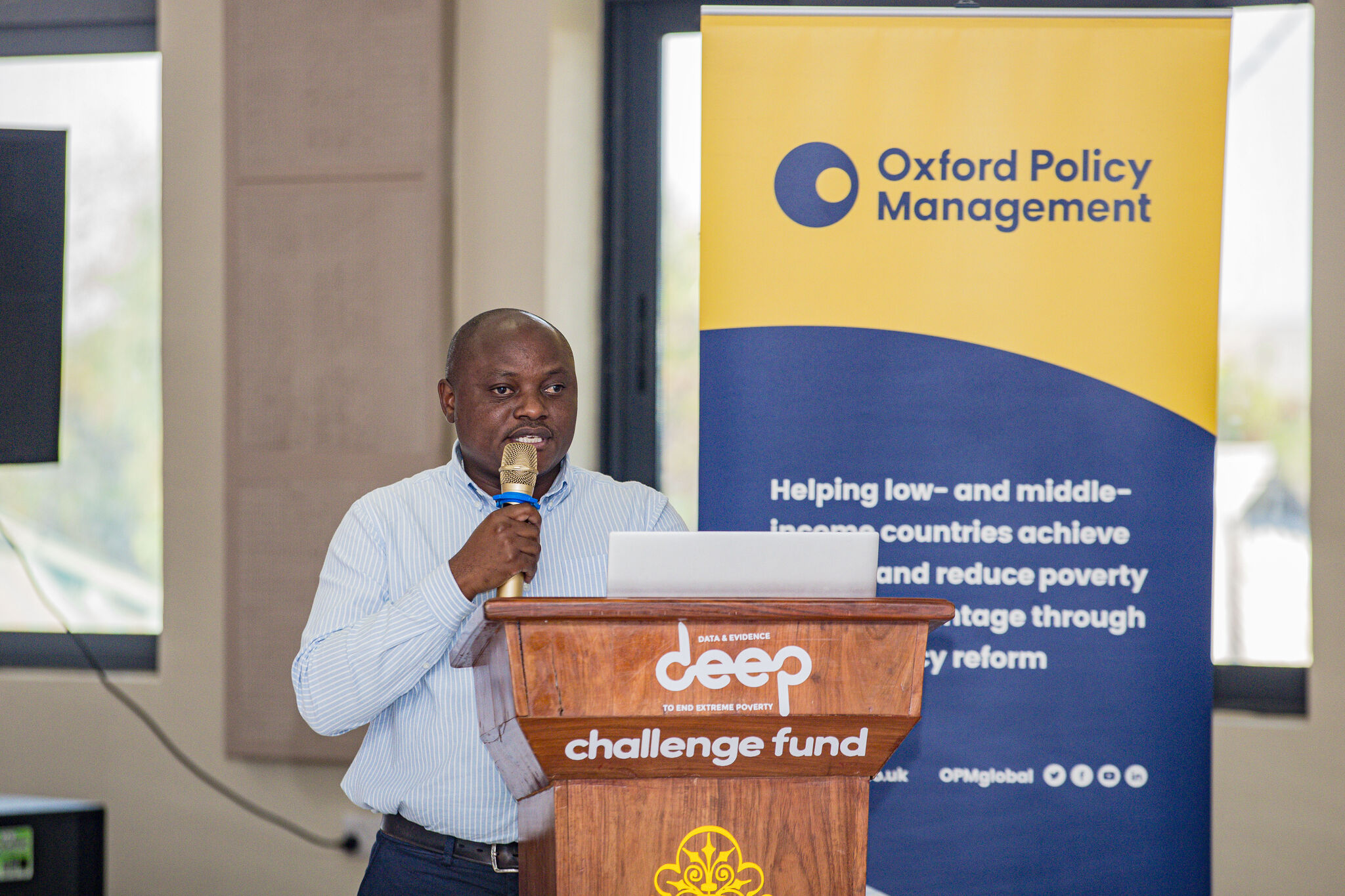
Ifakara Health Institute (IHI), represented by Dr. Peter Binyaruka, Research Scientist and Health Economist, participated in the DEEP Tanzania Challenge Fund Dissemination Workshop held on October 21, 2026, in Dodoma, Tanzania.
The workshop brought together researchers, policymakers and development partners to share findings and policy implications from ten research projects supported by the Data & Evidence to End Extreme Poverty (DEEP) Challenge Fund, an initiative aimed at generating locally relevant evidence to inform poverty reduction policies and programmes.
Dr. Binyaruka, who served as Principal Investigator of Ifakara's DEEP Project, shared research examining the relationship between poverty and health in Tanzania, particularly how household and geographical poverty influence health outcomes, demand for healthcare services and healthcare provision.
Understanding poverty-health dynamics in Tanzania
Titled "Understanding Poverty-Health Dynamics and Their Influence on Health, Demand and Supply of Healthcare in Tanzania," the Ifakara-led project received a GBP 35,000 grant through the DEEP Challenge Fund.
The research aimed to understand the drivers and influence of household and geographical poverty on health and healthcare access, generating evidence to inform policies that could help break the cycle in which poverty contributes to poor health, while illness and healthcare spending further deepen household poverty.
Implemented over a six-month period between December 2024 and June 2026, the project involved secondary analysis of national household survey data, data extraction workshops, stakeholder engagement meetings and research dissemination activities.
Reflecting on the research journey, Dr. Binyaruka described the initiative as an important opportunity for Ifakara researchers to examine health through a broader socioeconomic perspective.
"For researchers at Ifakara Health Institute, this journey was an opportunity to look at health through a poverty lens – exploring the complex dynamics and interlinkages between poverty and health, including how poverty shapes access to healthcare and how ill health and health spending can further deepen poverty using national household surveys," he said.
The research contributes to a better understanding of health inequalities and the financial challenges households face when seeking healthcare, providing evidence to support discussions on equitable healthcare access, financial protection and poverty reduction in Tanzania.
Advancing locally generated evidence for policy
The dissemination workshop marked the culmination of research projects supported through the DEEP Challenge Fund, with ten research teams presenting findings on development challenges including health inequalities, social protection, climate change, access to credit, youth productivity and poverty reduction.
Reflecting on the event, Dr. Binyaruka welcomed the opportunity to engage with fellow researchers and learn from the diverse projects.
"It was encouraging to see the breadth of locally led research addressing critical evidence gaps and generating insights to inform policies and programmes aimed at reducing poverty in Tanzania," he noted.
The workshop also provided an opportunity for researchers to engage with policymakers and development partners on translating research evidence into practical interventions.
The DEEP Challenge Fund is part of a global research initiative led by Oxford Policy Management (OPM), in collaboration with the World Bank's Development Data Group, with funding from the United Kingdom's Foreign, Commonwealth and Development Office (FCDO). The initiative supports local researchers and analysts in generating evidence to strengthen policies and strategies aimed at reducing extreme poverty and vulnerability.
For Ifakara, the project represents another contribution to generating research evidence that connects health outcomes with broader socioeconomic challenges and supports evidence-informed policymaking.
"This has been a valuable contribution to Tanzania’s research and evidence landscape, reinforcing the importance of locally generated evidence in shaping more responsive, equitable, and effective policies," Dr. Binyaruka concluded.