

EDITORIAL: Health economists call for smarter healthcare spending to improve services
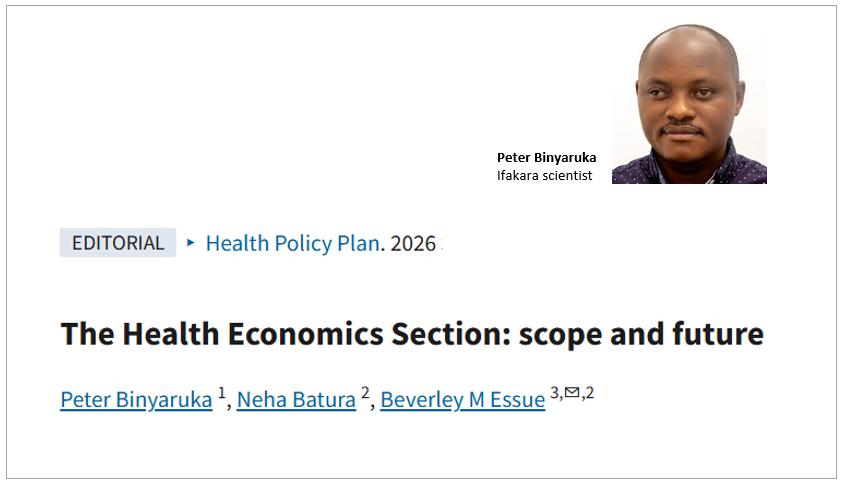
As governments worldwide face growing healthcare demands and limited budgets, health economists are calling for stronger evidence to help countries make better decisions about health care financing, resource allocation and equitable access to care.
Dr. Peter Binyaruka, a health economist at Ifakara Health Institute (IHI), has contributed to this global discussion as lead author of an editorial recently published in the Health Policy and Planning journal. The editorial outlines emerging priorities and future directions for health economics research, particularly in low- and middle-income countries.
Titled The Health Economics Section: Scope and Future, the editorial was co-authored by Dr. Neha Batura of University College London and Dr. Beverley Essue of the University of Toronto. The authors reflect on how health economics research has evolved over the past five years and identify areas requiring greater scientific and policy attention.
Five years of health economics research
The authors reviewed approximately 220 articles published in the journal’s Health Economics Section between 2020 and 2025, examining the issues that have received the most attention in the field.
Economic evaluations, costing and budget analyses accounted for the largest share of publications, at 29%, followed by health financing and insurance at 28%. Research on financial protection accounted for 13%, while provider payment and equity analyses each represented 9%.
These findings highlight growing efforts to understand not only the costs of healthcare but also how limited resources can be used more efficiently and fairly to improve health outcomes.
Emerging priorities for global health systems
Looking ahead, the authors identify several areas requiring greater research attention, including sustainable health financing, domestic resource mobilization, taxation, private-sector involvement in healthcare and the economic implications of climate change.
They also highlight the need for more evidence on digital health technologies, mental health financing, noncommunicable diseases and how financial incentives influence the decisions of patients and healthcare providers.
A call for research that informs policy
Dr. Binyaruka and his co-authors also argue that health economics research must go beyond measuring costs to examine how financing decisions affect access to healthcare, health inequalities and the long-term sustainability of health systems.
They emphasize the importance of generating evidence that helps policymakers navigate difficult choices, set spending priorities and develop financing approaches that promote efficiency, equity and sustainability.
Why this matter
In low- and middle-income countries such as Tanzania, where healthcare needs continue to grow alongside competing demands on public resources, stronger health economics evidence can help governments make informed decisions about where to invest, which services to prioritise and how to protect households from financial hardship.
The editorial underscores the importance of research grounded in local health system realities while contributing to global efforts to achieve universal health coverage.
Read the editorial here.