
TRAINING: Health teams empowered to enhance the quality of newborn care
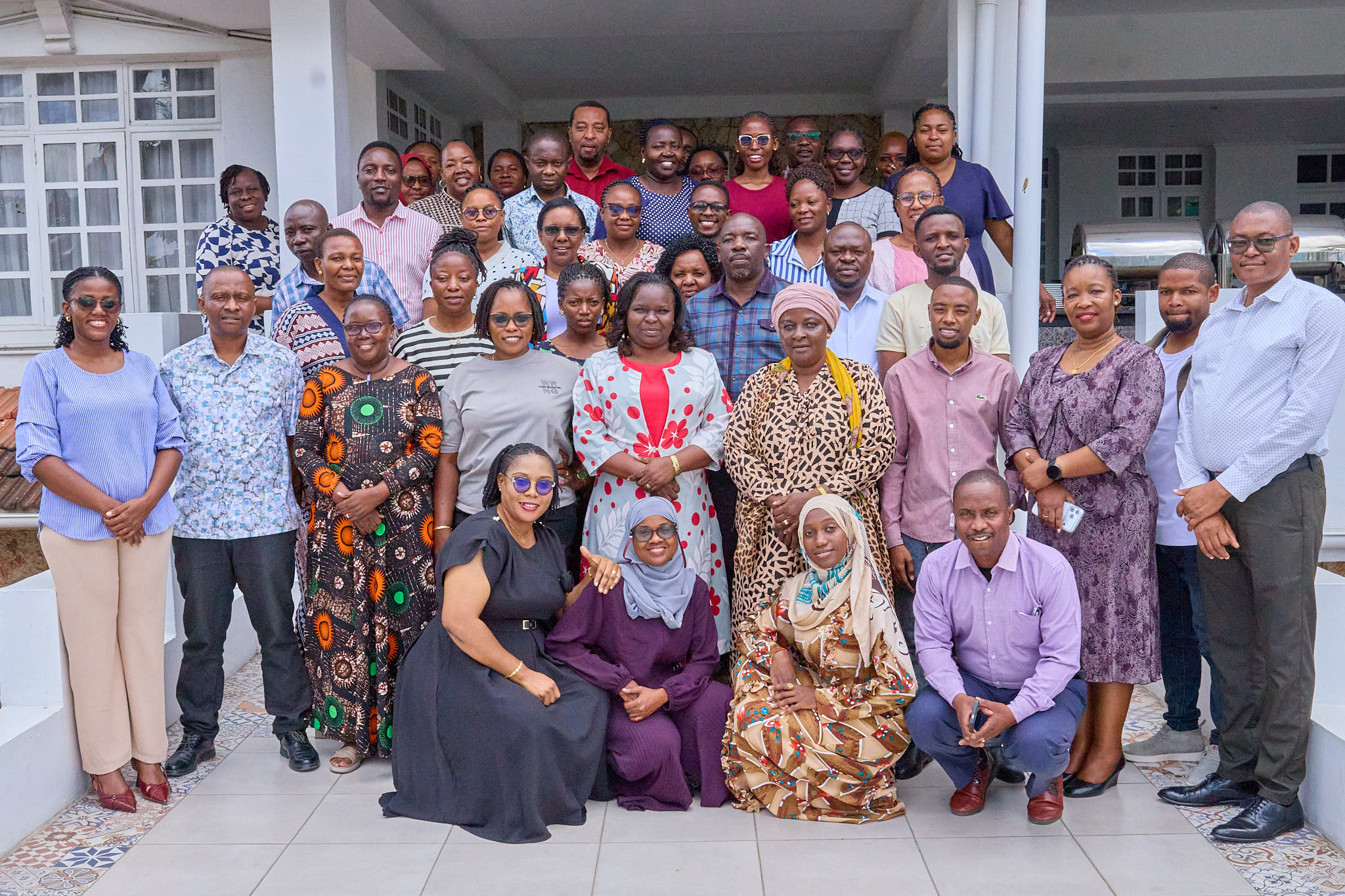
From 21–25 September, Regional Health Management Teams (RHMTs) and Council Health Management Teams (CHMTs) from Dar es Salaam and Mbeya regions came together for a five-day Quality Improvement (QI) Master Training under the NEST360 Newborn Programme, designed to strengthen health teams’ capacity to identify gaps in newborn care, use data to guide action, and lead continuous improvements within health facilities.
The training marks the third session of the QI Master Training, following earlier sessions held in Mwanza and Kilimanjaro. It is part of a broader effort to strengthen quality improvement capacity across regions and translate learning into action at facility level. Following the training, QI training will immediately begin at health facilities in Dar es Salaam, Mbeya, Kilimanjaro and Mwanza, bringing the knowledge and skills developed through the master training directly to frontline health care teams.
The training responds to lessons from the first phase of NEST360 implementation (2019–2023), which showed that health facilities that designed and fully implemented quality improvement projects recorded better performance. It also highlighted challenges including staff turnover, limited integration of QI into routine work, weak ownership of improvement activities, gaps in data interpretation and use, and limited QI leadership and teamwork.
Moving from identifying problems to testing solutions
Across the five days, participants were introduced to practical approaches for understanding problems in healthcare and developing, testing and measuring solutions.
Sessions covered the science of improvement, problem identification and prioritisation, the Model for Improvement and PDSA cycles, root-cause analysis, measurement for improvement, testing change, QI coaching and data use for decision-making. Participants also worked with real facility data and took part in group exercises, case studies and simulations of Work Improvement Team meetings.
The programme was designed to be highly practical. Rather than focusing only on theory, participants were expected to apply QI concepts to real health-system challenges, develop improvement aims, identify change ideas and consider how progress could be measured over time.
This approach reflects a central principle of the training: improving newborn survival requires more than equipment and infrastructure. It also requires health systems that can continuously identify gaps, learn from data and adapt the way care is delivered.
Building a network of QI coaches
A key focus of the training was developing QI Master Trainers and coaches who can continue supporting facility teams after the training ends.
The coaches are expected to provide mentorship, conduct QI coaching during routine health facility visits, support teams in designing and implementing improvement projects, strengthen data use, and help integrate QI into routine supportive supervision. They will also support documentation and sharing of results so that successful approaches can contribute to wider learning.
The training therefore looks beyond the five-day classroom programme. Post-training activities include following up on QI projects developed by participants, tracking improvement indicators, documenting results and supporting teams through continued mentorship.
Sustaining improvements beyond the training room
The longer-term goal is to embed quality improvement within existing health-system structures rather than treating it as a stand-alone activity.
The programme proposes integrating QI into supportive supervision, existing mentorship systems and quarterly facility review meetings, while exploring opportunities for continued professional development accreditation. NEST360 will also continue virtual QI discussions to enable teams to share experiences and learning.
Ultimately, the training seeks to strengthen local capacity and create a sustained culture of improvement across health facilities.
As the NEST360 training framework notes, improving newborn survival is not only about infrastructure or equipment—it is also about building systems that can consistently deliver high-quality newborn care.