

BLOG: Ifakara researchers spotlight Tanzania’s rabies control lessons
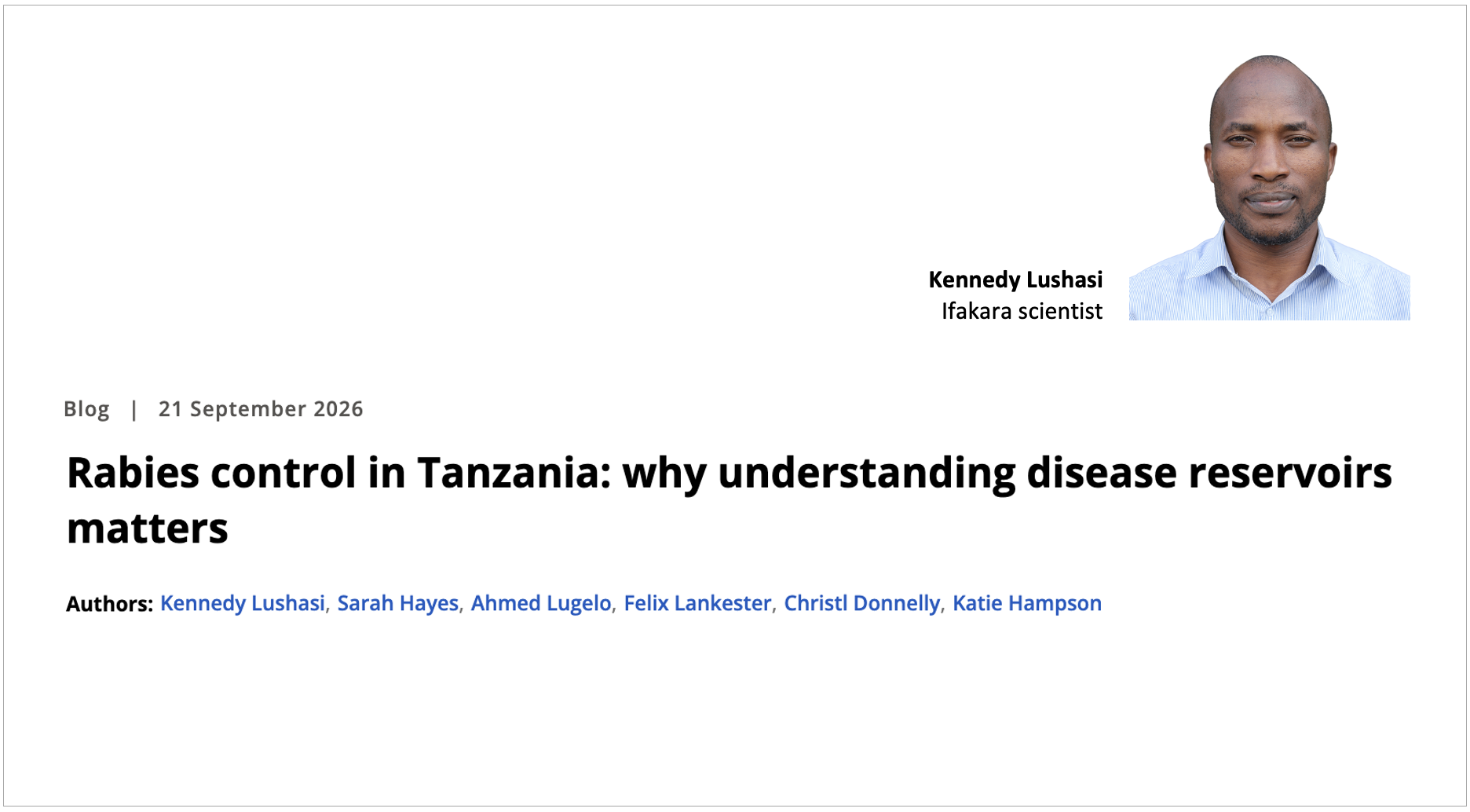
As part of World Rabies Day and the Ifakara Health Institute’s 70 Years of Impact celebrations, IHI researchers have contributed to a new CABI One Health Knowledge Bank blog highlighting lessons from Tanzania’s experience in controlling rabies and understanding how the disease moves between animals, people and wildlife.
Published on 21 September 2026, the blog, “Rabies control in Tanzania: why understanding disease reservoirs matters,” brings together research and field experience from Tanzania to explore a central question in rabies elimination: which animal populations are responsible for maintaining transmission?
The CABI blog was co-authored by Ifakara scientist Kennedy Lushasi and draws on studies conducted by IHI rabies researchers Dr J. Changalucha and Dr M. Sambo, highlighting research on rabies transmission, dog vaccination, surveillance and access to post-exposure prophylaxis (PEP).
Evidence from southern Tanzania and Pemba shows that domestic dogs are the key maintenance population for rabies, underscoring the importance of sustained dog vaccination. Tanzania’s vaccination campaigns demonstrated declines in animal rabies, human exposures and deaths, while cases increased again when vaccination stopped.
The research highlights the importance of a One Health approach, bringing together human health, veterinary services, wildlife, research and communities to support progress towards the global Zero by 30 goal.
The contribution is being highlighted as part of World Rabies Day under IHI@70 – 70 Years of Impact, showcasing how decades of Ifakara research continue to contribute to public health priorities in Tanzania and beyond.
Read the full blog: “Rabies control in Tanzania: why understanding disease reservoirs matters.”