

#IPHC2026: Bringing evidence and innovation to the future of primary health care
Ifakara Health Institute is proud to be participating in the 2nd International Primary Health Care Conference, taking place from 9–11 September 2026 at the Arusha International Conference Centre (AICC), Arusha, Tanzania. The conference is being held under the theme, “Towards Universal Health Coverage: Strengthening Sustainable Health Financing, Efficiency and Quality Improvement within Primary Health Care.”
The conference brings together policymakers, researchers, healthcare professionals, development partners, academic institutions, and other stakeholders to explore approaches to strengthening primary health care and advancing progress towards Universal Health Coverage (UHC).
Discussions focus on sustainable health financing, improving the efficiency and quality of health services, strengthening health systems, and ensuring that communities can access essential healthcare services.
Connecting research with stronger health systems
For Ifakara, the conference provides an important platform to connect its research and innovations with the broader goal of building stronger, more equitable, and sustainable health systems. Through decades of research and implementation work, the Institute has contributed evidence that supports improvements in health policy, service delivery, disease prevention, maternal and newborn health, community health, health information systems, and other areas that are central to effective primary health care.
Sharing evidence and engaging in dialogue
At the conference, Ifakara scientists are participating in various forums, presentations, and discussions, sharing research evidence and experiences while engaging with other stakeholders on opportunities to strengthen Tanzania’s health system. Their participation also creates opportunities for knowledge exchange and collaboration around practical, evidence-based solutions for improving the quality and efficiency of healthcare delivery.
Showcasing innovations for maternal and newborn health
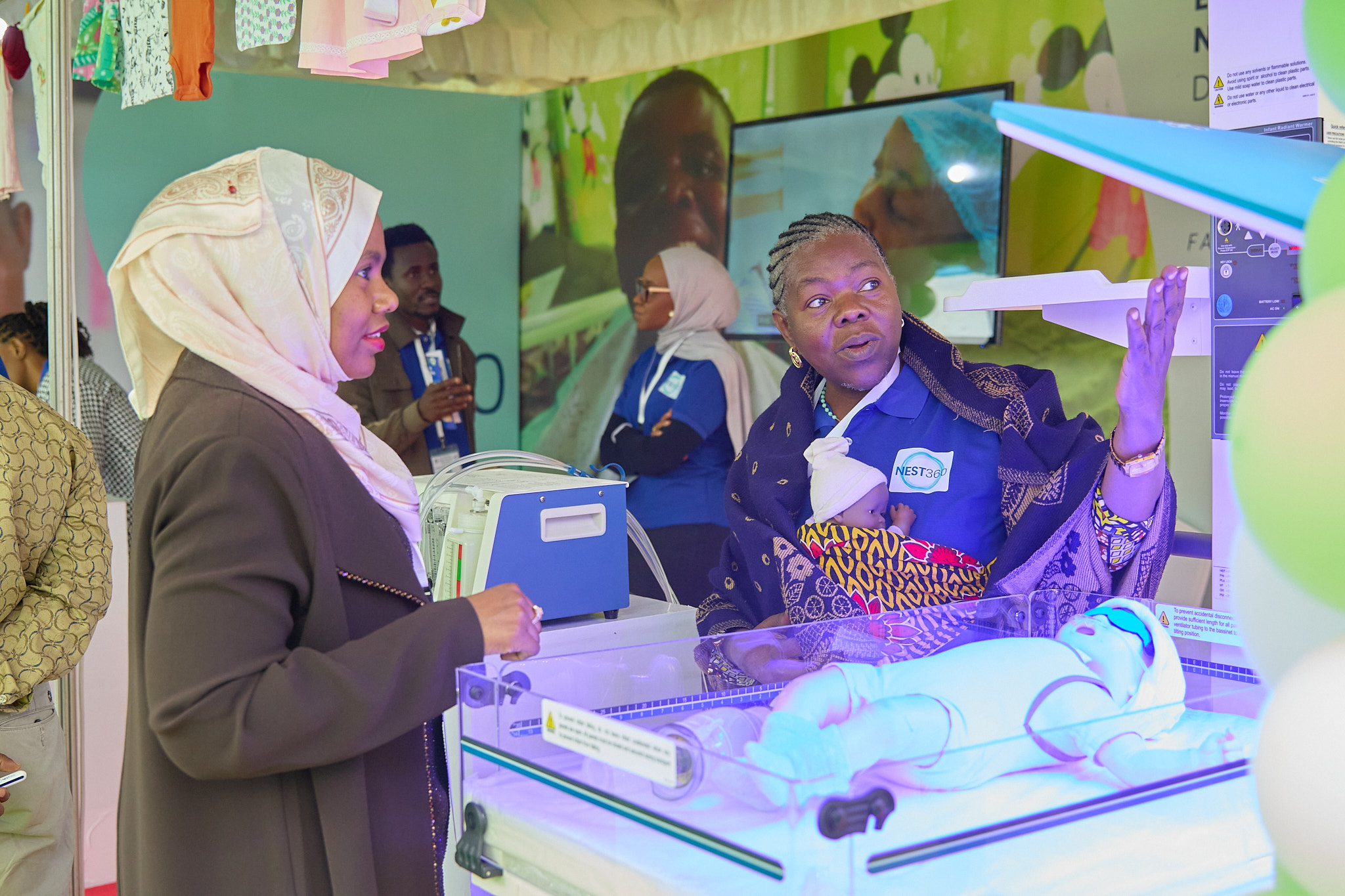
The Institute is also participating as an exhibitor, with the NEST360 initiative showcasing its work and innovations aimed at improving care for small and sick newborns. Through its focus on strengthening newborn care within health facilities, NEST360 demonstrates how evidence-based interventions, quality improvement, health-system strengthening, and capacity building can contribute to better health outcomes and stronger primary healthcare systems.
Ifakara research that support primary health care
Ifakara’s portfolio reflects the Institute’s contribution to strengthening primary health care through research, implementation science and health-system innovation. Current initiatives include the MOCA Project, which is testing digital clinical decision-support tools and clinical mentorship to improve the quality of care and responsible antibiotic use during primary care consultations in Zanzibar; the IMARISHA Project, which addresses the wellbeing and safety of frontline health workers in primary healthcare facilities; and the MMS-POST study, which is investigating postpartum micronutrient supplementation and its potential to improve maternal and infant health outcomes.
The Institute is also supporting the Government of Tanzania to develop a roadmap for scaling up multiple micronutrient supplements and low-dose calcium through antenatal care, with a focus on policy, monitoring, supply chains and financing. Other initiatives, including JaundiceCARE and the IMCI+ Consortium, are working to strengthen the quality of newborn and child healthcare through improved detection, management and evidence-based approaches in resource-constrained settings. Together, these efforts demonstrate how Ifakara’s research contributes to stronger frontline services, better quality of care, informed decision-making and more sustainable health systems, key building blocks for achieving Universal Health Coverage.
Turning evidence into impact
The Institute’s participation reinforces its commitment to generating and translating scientific evidence into solutions that can strengthen health systems, improve the quality and efficiency of healthcare services, and contribute to achieving Universal Health Coverage in Tanzania and beyond.