

MALARIA VACCINES: Stopping the parasite from infected people to mosquitoes
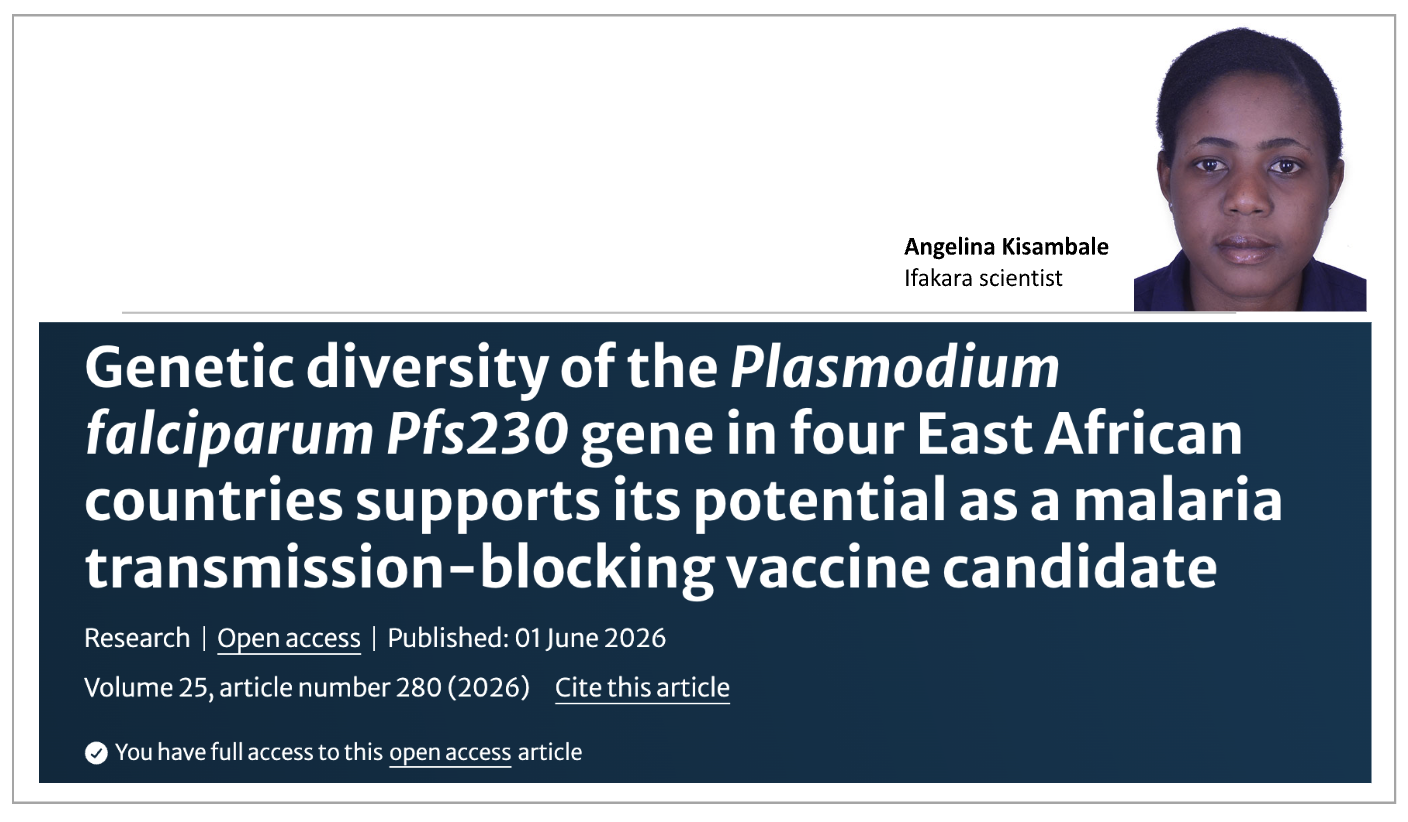
As malaria parasites become increasingly resistant to medicines, and mosquitoes develop resistance to insecticides, scientists are looking for new ways to stop malaria from spreading. A new study has identified a promising target that could help future vaccines block malaria transmission from infected people to mosquitoes.
The study found that a gene called Pfs230 is highly similar among malaria parasites collected from Ethiopia, Kenya, Tanzania and Uganda. This low level of genetic variation is encouraging because it suggests that a vaccine targeting this gene could potentially work against different malaria parasite populations.
The researchers analysed more than 1,300 malaria parasite genetic sequences from the four East African countries using data from the MalariaGEN Pf7 database.
Angelina Kisambale from the Ifakara Health Institute is the lead author. She worked along with colleagues from Tanzania and Kenya.
A vaccine that could stop malaria at the mosquito
Most people think of malaria vaccines as vaccines designed to protect an individual from becoming sick. But scientists are also exploring another type of vaccine with a different goal: stopping the parasite from being passed on to mosquitoes. These are known as transmission-blocking vaccines, or TBVs.
When a mosquito bites a person carrying malaria parasites, it can pick up the parasites and later transmit them to another person. A transmission-blocking vaccine aims to interrupt this cycle.
One of the genes attracting attention is Pfs230. The gene produces a protein that malaria parasites need during an important stage of their development inside the mosquito.
If a vaccine can target this protein effectively, it could potentially prevent the parasite from developing and multiplying inside the mosquito. In simple terms, the aim is to stop the mosquito from becoming an effective carrier of malaria.
Why genetic diversity matters
For a vaccine to work well across different places, scientists need to know whether the target they are attacking changes significantly from one parasite population to another. If a target varies greatly, a vaccine designed against one version may not work as well against another.
The researchers therefore examined genetic information from malaria parasites collected in Ethiopia, Kenya, Tanzania and Uganda. Of 1,471 sequences initially examined, 1,312 were of sufficient quality for detailed analysis.
The researchers found that the Pfs230 gene had very low genetic diversity across the four countries. This means that, despite parasites coming from different countries, the gene remained remarkably similar.
The gene looks remarkably stable
The study identified 496 different genetic patterns, known as haplotypes, among the parasite sequences analysed in detail. Yet only a small proportion—about 8%—were shared between two or more populations.
Other genetic analyses also found little evidence that the parasite populations from the four countries were substantially different from one another in the Pfs230 gene. The researchers' evolutionary analysis similarly showed limited differences between parasite populations.
Taken together, these findings suggest that the Pfs230 gene has remained relatively stable as malaria parasites circulate across East Africa. That stability is important when scientists are considering potential vaccine targets.
Why this could matter for Tanzania and Africa
Malaria control has traditionally relied heavily on tools such as insecticide-treated mosquito nets, indoor spraying and antimalarial medicines. These tools have saved millions of lives, but resistance to both insecticides and antimalarial drugs is making malaria increasingly difficult to control.
Transmission-blocking vaccines could offer another layer of protection by attacking malaria at a different point in its life cycle.
For countries such as Tanzania, where malaria remains a major public health challenge, a vaccine that could help reduce transmission could become an important addition to existing malaria-control tools.
One promising target—but not yet a vaccine
The findings are encouraging, but the researchers stress that more work is needed. The study does not show that a Pfs230-based vaccine is already effective in people. Instead, it provides genetic evidence supporting the gene as a promising target for further vaccine research.
Future studies will need to investigate Pfs230 alongside other potential transmission-blocking targets and determine how well vaccine candidates based on these targets can prevent malaria parasites from completing their life cycle inside mosquitoes.
The long-term goal is ambitious: to develop vaccines that do more than protect individuals from malaria—to help stop the parasite from being passed from one person to another.
If successful, such approaches could give malaria elimination programmes another weapon in the fight against a parasite that continues to evolve around existing tools.
Who’s behind this study?
Angelina Kisambale from the Ifakara Health Institute is the lead author. She worked along with colleagues from the Ifakara Health Institute, National Institute for Medical Research, Muhimbili University of Health and Allied Sciences, Nelson Mandela African Institution of Science and Technology, University of Dar es Salaam, National Malaria Control Programme, Prime Minister’s Office, Regional Administration and Local Government (all from Tanzania), International AIDS Vaccine Initiative and Ortholog (Kenya).
>> Read the full publication, here.