

MOSQUITO DAY 2026: Ifakara marks the Day with TWO never miss contributions!
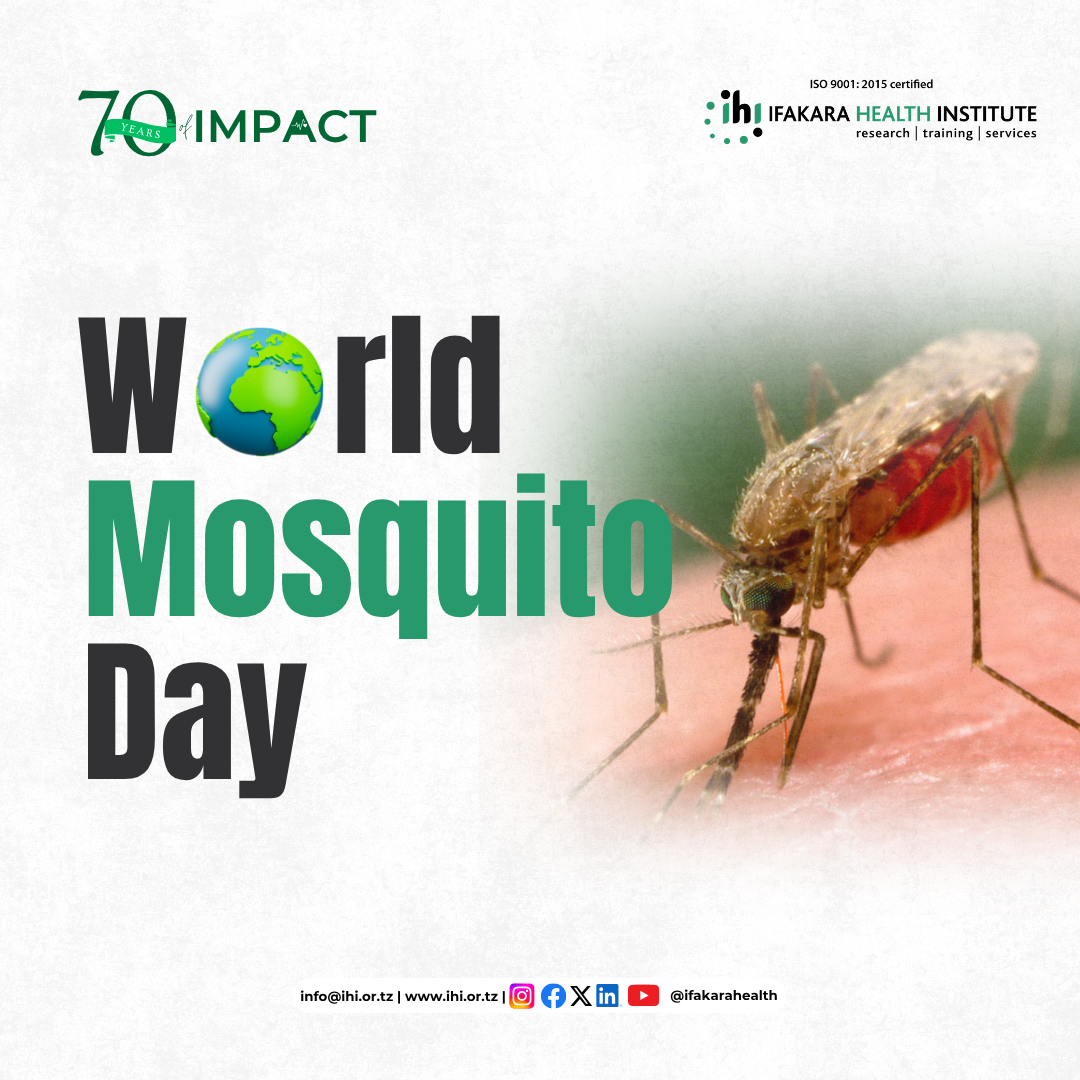
Ifakara Health Institute, today joins the global community in commemorating World Mosquito Day. Observed annually on August 20 to mark Sir Ronald Ross’s historic 1897 discovery that female Anopheles mosquitoes transmit malaria, the day highlights the ongoing threat of mosquito-borne diseases and the urgent need for innovative control strategies.
This year, Ifakara is marking the occasion with two strategic contributions that underscore its leadership in malaria research – signifying both direct engagement and connection with the people it’s doing research for and taking science beyond journal publications.
Live television engagement
Seasoned malaria researcher Dr. Brian Tarimo appeared live on Azam TV’s Morning Trumpet show from 7AM EAT, to share updates on Ifakara’s malaria control research. He discussed mosquito behaviour and their implications for next-generation interventions.
Release of new research findings
This is an exclusive coverage: Ifakara is sharing the latest results from a semi-field study conducted in south-central Tanzania on the egg-laying behaviour of wild Anopheles arabiensis mosquitoes—the primary malaria vector in many parts of the country.
Key findings include:
- Female mosquitoes carrying eggs strongly prefer smaller water pools over larger ones.
- Nearly half of the females (49.2%) practised “skip-oviposition,” spreading their eggs across two to four different water bodies rather than depositing them all in one place.
- Mosquitoes that spread their eggs tended to lay more eggs overall while placing fewer eggs in each individual habitat, and they moved more frequently between small and large sites.
Researchers interpret this behaviour as a possible “bet-hedging” strategy that increases the chances of offspring survival if one breeding site dries up or becomes unsuitable.
Why does this matter for malaria control?
With insecticide resistance eroding the effectiveness of bed nets and indoor residual spraying, attention is turning to larval source management—targeting mosquitoes while they are still in water. Understanding preferred breeding sites and movement patterns can guide more precise interventions, including autodissemination (where females carry control agents to breeding sites) and attract-and-kill approaches.
“A female mosquito choosing between two pools of water may seem like a small detail,” the study notes, “but when millions of mosquitoes make similar choices, those behaviours can influence where malaria mosquitoes reproduce and how effectively control programmes can reach them.”
By combining cutting-edge behavioural research with public engagement, Ifakara Health Institute continues to advance smarter, more targeted tools to stop mosquitoes before they take flight, bite, and transmit malaria.
Enjoy our complete coverage of this fresh evidence here: