

CHILD DEVELOPMENT: Study finds gaps – as early as age 2 – in poorer Tanzanian households
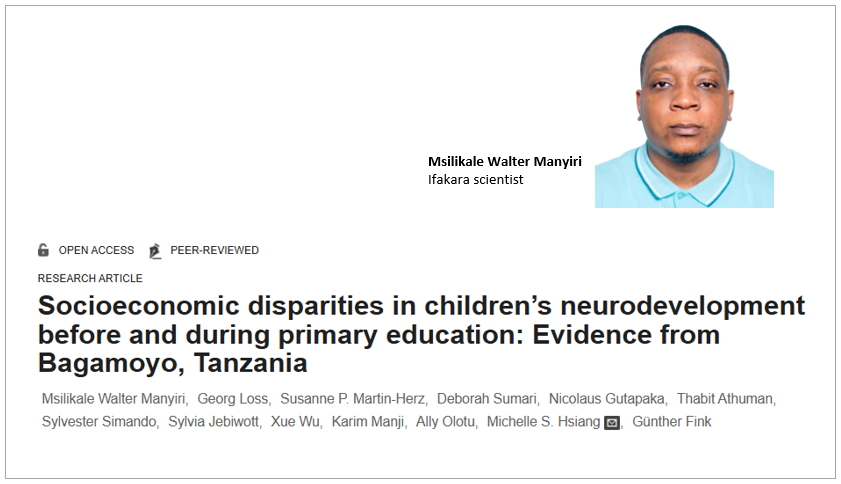
A study in Bagamoyo has found that differences in children’s neurodevelopment linked to household wealth begin to appear at around age two and become more noticeable as children reach preschool and primary school, underlining the need for early support for children from the poorest households.
The study was conducted using data from the CHILD study, which examines child health and development in Bagamoyo.
Researchers from Ifakara Health Institute — including Msilikale Walter Manyiri, Deborah Sumari, Nicolaus Gutapaka, Thabit Athuman, Sylvester Simando and Dr Ally Olotu — were among the study authors, alongside researchers from the Swiss Tropical and Public Health Institute, University of Basel, University of California San Francisco and Muhimbili University of Health and Allied Sciences.
Why the findings matter
The findings highlight an important opportunity: supporting children early, particularly those growing up in poorer households, may help reduce developmental differences before they widen.
Early childhood is a critical foundation for learning — and ensuring every child has the opportunity to develop to their full potential starts well before they enter primary school.
Children start at a similar level — then the gap emerges
Children from poorer and wealthier households had similar neurodevelopment scores during their earliest years. But from around age two, a difference began to occur, with children from wealthier households showing stronger developmental outcomes.
By the preschool years, children from the poorest households were performing noticeably below children from the wealthiest households, and the difference became even larger among school-age children.
The findings come from a study of 590 children aged six months to 10 years in Bagamoyo District, Tanzania, published in PLOS ONE. Researchers assessed children at different stages of development, including early childhood, preschool and school age, and compared their neurodevelopmental outcomes with household socioeconomic status.
Poverty may shape opportunities for early development
The study found that socioeconomic differences were not limited to neurodevelopment.
At age six, about 80% of children from the wealthiest households were estimated to be enrolled in school, compared with 45% of children from the poorest households. By age seven, enrolment was around 90% among children from wealthier households but only 50% among those from poorer households. At age eight, the gap narrowed, but remained visible.
Researchers say unequal access to resources may contribute to these differences, including access to learning opportunities, stimulating home environments, nutrition, healthcare and education. However, the study does not prove that poverty directly causes the observed developmental differences. Instead, it shows a clear relationship between household wealth and children’s development.
The preschool years could be a critical window
The researchers identify the period between 2 and 6 years as an important time to support children before developmental differences become more pronounced.
They recommend strengthening early childhood development programmes that support children’s learning and development while also helping parents and caregivers create supportive and stimulating home environments.
They also call for targeted support for children from the poorest households as they transition into preschool and primary school.
Read the publication here.