

SURGICAL CARE: Study reveals shortage for hundreds of refugees in Nyarugusu Camp
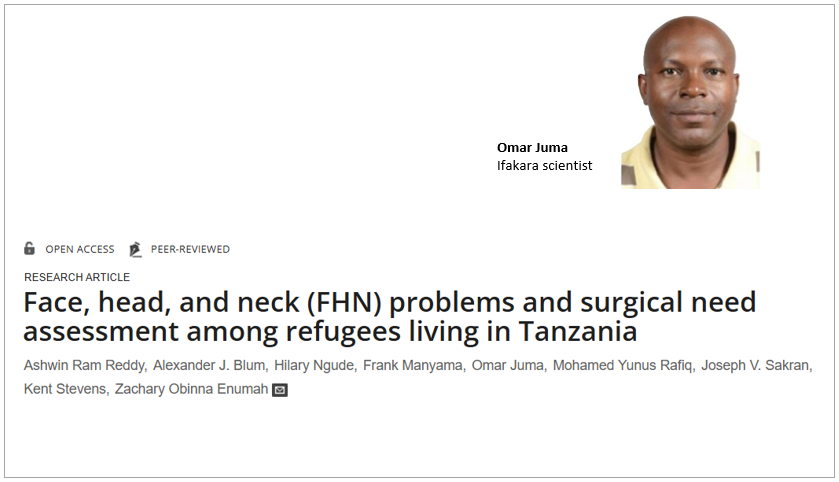
A recent study has revealed a high burden of untreated surgical conditions affecting the face, head, and neck (FHN) among refugees living at Nyarugusu Refugee Camp in western Tanzania.
Published in PLOS Global Public Health, these study results show that many refugees live with long-standing FHN conditions—many of which could be improved or cured through surgery—but remain untreated due to limited access to specialized care. The findings underscore critical gaps in surgical services within humanitarian settings.
The study was conducted by an international team of researchers from the United States, Tanzania, and China, with Omar Juma from Ifakara Health Institute playing role of Project Administrator and author of the publication.
Surveying the burden of FHN conditions
Between August and September 2021, researchers surveyed refugees to estimate how many people reported FHN problems and potential surgical needs. Of those surveyed, findings show:
- 462 refugees reported having a FHN condition at some point in their lives.
- More than half (52%) said their condition was currently affecting them and might require surgery.
- 73% reported that their condition had persisted for more than a year.
- The most common conditions were non‑injury-related wounds (35%) and acquired malformations (28%), both often requiring specialized surgical care.
Barriers to surgical care
The study also highlights several barriers that refugees face in accessing surgical care, including limited availability of services, financial constraints, logistical challenges, and security concerns.
These barriers contribute to a growing unmet surgical need, leaving many individuals with long-term health challenges.
Urgent need for intervention
Researchers emphasize that these findings underscore the urgent need to strengthen surgical services within refugee camps and to ensure timely treatment for conditions that can affect health and quality of life.
“This study underscores the need for targeted interventions to expand otolaryngology-head and neck surgery (OHNS) services for FHN conditions in under-resourced, protracted refugee settings,” the authors note.
They also advocate for temporary non-surgical care while arranging faster referrals for surgery to ensure that people with chronic surgical conditions get timely and effective treatment.
Read the publication, here.