
Shaping Ifakara’s Scientific Future Beyond 70 Years
>> Writes: Bilal Mpembamoto
Today, as the Institute celebrates 70 years of impact, the question is no longer simply how far it has come, but how far science can take it.
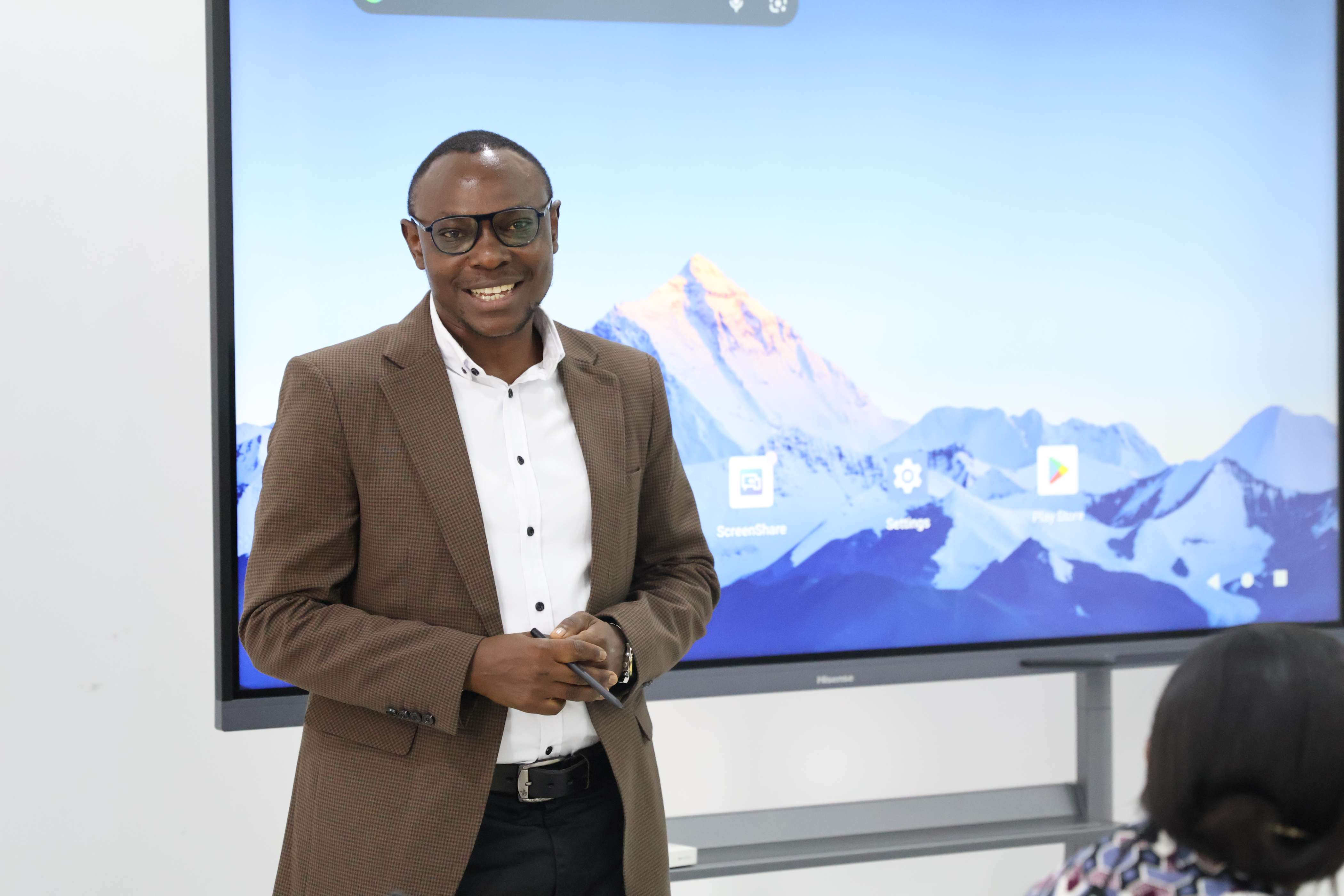
That question makes the appointment of Dr. Emmanuel Kaindoa as Director of Science, effective 1 November 2026, particularly significant. Succeeding Dr. Ally Olotu, who recently took up the position of Chief Executive Director, Dr. Kaindoa assumes responsibility for guiding the scientific direction of an institution at an important point in its history.
It is a responsibility that calls for more than scientific credentials. It requires a leader who understands how research works, how scientific teams grow, how partnerships deliver results and, perhaps most importantly, how discoveries can be translated into solutions for real-world health challenges.
Dr. Kaindoa brings considerable experience in all these areas.
A scientist who understands the business of science
Before taking up his new position, Dr. Kaindoa spent nearly a decade in progressively senior leadership roles within Ifakara's Environmental Health and Ecological Sciences (EHES) Department, first as Deputy Head for six years and subsequently as Head from December 2022.
His leadership coincided with a period of substantial research activity. Under his stewardship, EHES managed 41 active research projects with a combined value of approximately US$47.8 million, making it the Institute's largest departmental research portfolio.
Behind these figures lies a demanding responsibility: coordinating diverse research teams, managing complex projects, maintaining scientific quality, nurturing partnerships and ensuring that research investments generate meaningful outcomes.
This experience has given Dr. Kaindoa a valuable understanding of the institutional architecture required to sustain scientific excellence. It also offers a strong foundation for his new role, which extends beyond one department to encompass the Institute's entire scientific enterprise.
His own research journey provides another dimension to this leadership experience.
With 70 research outputs and 23 grants, Dr. Kaindoa has developed an international research profile spanning malaria-vector ecology, climate and health, artificial intelligence-enabled surveillance and community-centred vector control.
His work has attracted support from some of the world's leading research and development partners, including the Gates Foundation, Wellcome, the European Union, the European and Developing Countries Clinical Trials Partnership (EDCTP), and the National Institute for Health and Care Research (NIHR-Wellcome).
But what makes this research experience particularly relevant to the future of Ifakara is the range of questions it addresses.
Where science meets the challenges of tomorrow
The public health challenges of the coming decades will not necessarily resemble those of the past. Climate change is reshaping disease transmission patterns. Urbanisation is creating new environmental conditions for disease vectors. Emerging infectious diseases continue to test health systems, while advances in artificial intelligence and other technologies are opening new possibilities for disease surveillance and prevention.
Addressing these challenges requires research institutions to think differently, work across disciplines and embrace innovation.
These are areas in which Dr. Kaindoa's scientific interests are already well established.
His research brings together vector ecology, environmental change, technology and community-based interventions to address some of the persistent challenges in infectious disease control.
The growing application of artificial intelligence in mosquito surveillance, for example, illustrates how scientific innovation can transform traditional approaches to monitoring disease vectors. Similarly, research into climate and health is increasingly important in understanding how environmental changes influence the distribution of disease vectors and the risks facing communities.
As Director of Science, Dr. Kaindoa has an opportunity to build on these experiences and encourage greater integration of research across the Institute's scientific disciplines.
The ambition is not simply to produce more research, but to strengthen the kind of science that anticipates emerging threats, informs decision-making and delivers practical solutions.
For an institution with seven decades of experience in translating scientific evidence into public health impact, this is a natural progression.
The next generation is part of the scientific legacy
Scientific leadership is ultimately about people as much as it is about projects, publications and funding.
Behind every major scientific breakthrough is a community of researchers, mentors, technicians and collaborators whose collective expertise makes discovery possible.
Dr. Kaindoa appears to understand this responsibility. He has supported 18 postgraduate and early-career researchers, contributing to the development of scientific talent and the next generation of public health leaders.
His recent appointment as an Honorary Senior Lecturer at the University of the Witwatersrand (Wits University) in South Africa further strengthens his academic connections and creates opportunities for postgraduate supervision and research collaboration.
For Ifakara, strengthening such academic relationships is important in building a research environment where young scientists can access mentorship, international networks and opportunities to contribute to globally relevant research.
His institutional experience also extends to governance. He has served on Ifakara's Management Committee, Institutional Review Board and Scientific Advisory Committee, bringing an understanding of the systems that support responsible, ethical and high-quality research. He also holds a Certificate in Directorship from the Institute of Directors Tanzania.
Together, these experiences position him to contribute to an institutional culture that values scientific integrity, collaboration, innovation and professional development.
From a legacy of discovery to the frontiers of innovation
Ifakara's 70-year journey offers a powerful reminder of what sustained investment in science can achieve.
From its early beginnings in Ifakara to its present-day research platforms and international partnerships, the Institute has continually evolved in response to changing public health needs. Its work has contributed to advances in malaria prevention and control, vaccine research, vector-control innovation and health systems strengthening.
Yet, the next chapter will require more than preserving these achievements.
It will demand the courage to explore new scientific frontiers, the capacity to build stronger multidisciplinary partnerships and the ambition to position African research institutions at the forefront of global scientific discovery.
For Dr. Kaindoa, the opportunity is to help shape that direction: to strengthen the Institute's research excellence, connect scientific expertise across disciplines, expand strategic partnerships and ensure that research findings translate into interventions, policies and practices that improve people's lives.
He takes on this responsibility following the interim leadership of Dr. Grace Mhalu, who has served as Acting Director of Science since 1 September 2026 while continuing as Head of the Health Systems, Interventions, Impact Evaluation & Policy Department.
As the Institute moves beyond its 70th anniversary, the challenge is clear: to build on the foundations laid by generations of scientists while preparing for health challenges that are only beginning to emerge.
Dr. Kaindoa's appointment represents an important moment in that journey. His combination of scientific experience, research leadership, institutional knowledge and commitment to developing future researchers provides a strong foundation for the task ahead.
Seventy years ago, Ifakara began with a vision to use science to improve health. Today, that vision continues to evolve. With new scientific leadership, the next chapter is not simply about extending a legacy—it is about expanding what science can achieve for generations to come.
_______
Bilal Mpembamoto heads the Communications Office at the Ifakara Health Institute. He’s an experienced science writer and media editor, having worked for reputable and top-notch media outlets in Tanzania, including The Guardian and Mwananchi Communications.